
TheRetroArcade
Veteran
Posts: 10,283
Joined: Feb 2026
Joined: Feb 2026
If you see Sid, tell him.

It's been a bumpy ride for Civilization 7, but two years after its widely criticised launch - and as the legendary 4X series celebrates its 35th anniversary - developer Firaxis has unveiled a host of new updates coming to the game. That includes an atomic age update, dragging Civ 7 into the present and beyond, as well as its first paid expansion, Earthrise, both arriving next year.
Starting with the free Arc of Tomorrow update, it finally drags Civ 7's current end-game into more contemporary times. It introduces a new age, the Atomic Age, extending the current playable timeline from the 1950s into the near future, and adds period-specific gameplay, alongside new buildings, units, visuals, and more. As with other Ages, it'll be possible to begin a game straight from in the Atomic Age, or go the long way round, starting in Antiquity.
As to what the Atomic Age brings, there're new civilisations and leaders, as well as expanded nuclear gameplay options, including "a fun twist on mutually assured destruction." New Multilateral Agreements enable leaders to "collectively react to developing situations - like a growing stockpile of nuclear warheads - with calls for disarmament or escalation", and new empire management tools provide options such as the ability to transform Settlements into new City-States. Among other things, City-States enable Proxy Warfare focused on smaller-scale conflicts rather than all-out empire warfare.
"There's a compelling need to honour the uncertainty and fear present in [the recent past], where proxy warfare became the new norm by which global conflict was conducted and the spectre of nuclear war loomed, as it still does today," Firaxis writes. "But there were also moments of light, triumph, and hope. Things once thought impossible, like spaceflight, were challenged and overcome as technology advanced at a rapid pace, while marginalised peoples rallied together to fight for justice and equality."

Elsewhere in Arc of Tomorrow, it'll be possible to make Great Works of Film that gives different benefits depending on the quality of the movie produced. These require Film Crews to hunt for the perfect filming location, which changes depending on your desired genre. Additionally, the introduction of Manufactured Goods means players can combine specific commodities to create powerful new resources like Enriched Uranium. Playtesting for Arc of Tomorrow begins this year, and sign up details are here.
Once Civilization 7 has been yanked into the modern age, Firaxis is pushing even further into the future with the launch of the game's space-race-themed first paid expansion. "From humanity's earliest days, we have always been fascinated with the sky," it writes. "In Earthrise, that sense of wonder shapes your civilisation's story from the Antiquity Age all the way to the near future."
Details on Earthrise are currently limited, but Firaxis says it's currently 'envisioning' space-themed gameplay mechanics that unlock new bonuses in each Age. During the Antiquity and Exploration Ages, for instance, you might chart the night sky and name the celestial bodies to gain insights about the solar system, and you might launch early orbital missions around Earth and the moon in the Modern Age. As for the Atomic Age, expect to establish your own space agency and launch missions to the stars, uncovering planetary features and resources you can exploit back on Earth.
Earthrise also includes a focus on environmental adaptability, such as the ability for players to alter the terrain and their empire's tile bonuses, and to gain biome bonuses as they become more proficient at working the land in each biome. Additionally, there's talk of new civil engineering structures to fight back against rising global temperatures and increasing Natural Disasters - including the ability to reverse the warming itself.
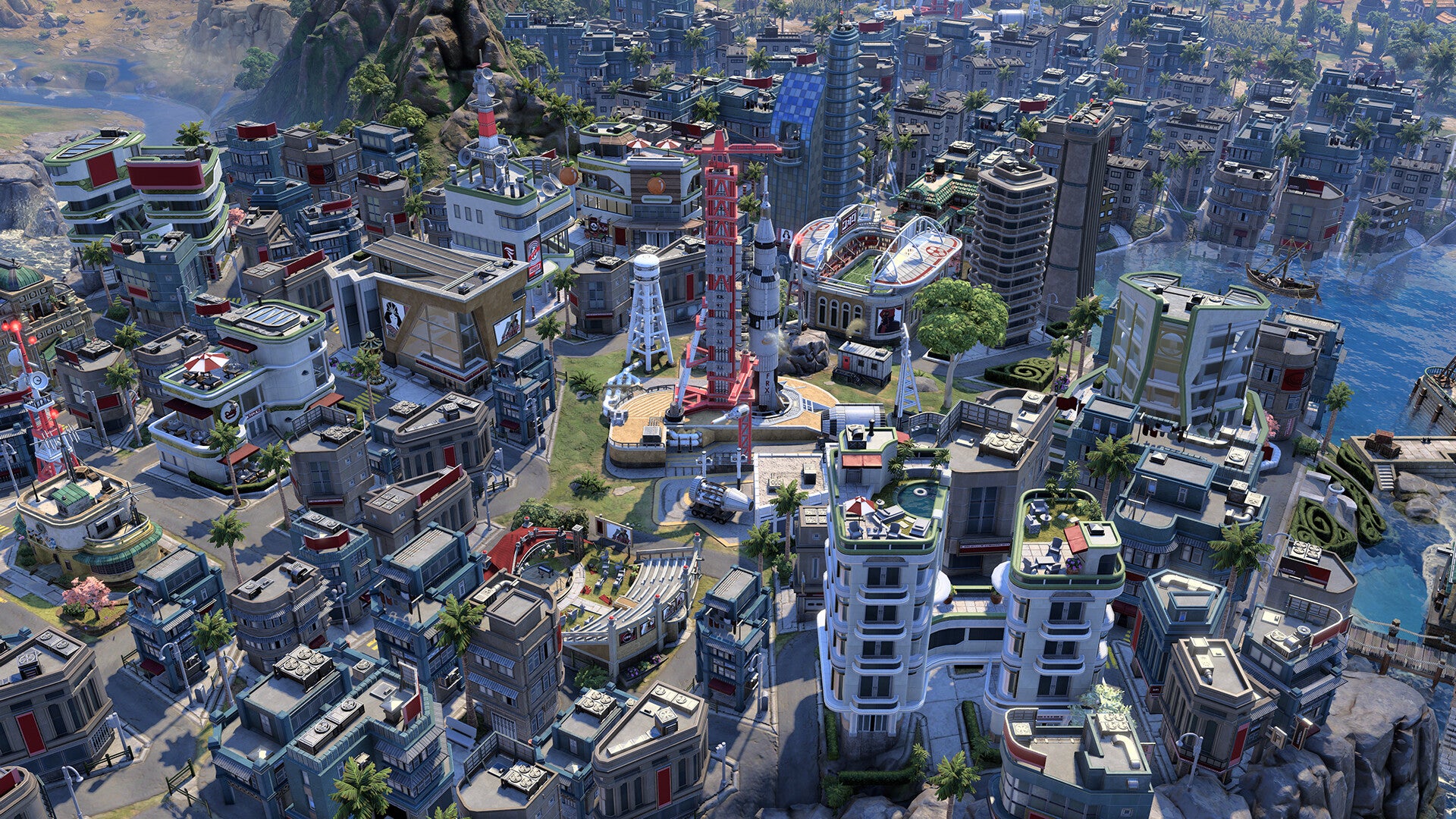
Arc of Tomorrow and Earthrise (Civ 7's first paid expansion, but not its first paid DLC - there've b...Read more: Full article on www.eurogamer.net
What do you think about this?
It's been a bumpy ride for Civilization 7, but two years after its widely criticised launch - and as the legendary 4X series celebrates its 35th anniversary - developer Firaxis has unveiled a host of new updates coming to the game. That includes an atomic age update, dragging Civ 7 into the present and beyond, as well as its first paid expansion, Earthrise, both arriving next year.
Starting with the free Arc of Tomorrow update, it finally drags Civ 7's current end-game into more contemporary times. It introduces a new age, the Atomic Age, extending the current playable timeline from the 1950s into the near future, and adds period-specific gameplay, alongside new buildings, units, visuals, and more. As with other Ages, it'll be possible to begin a game straight from in the Atomic Age, or go the long way round, starting in Antiquity.
As to what the Atomic Age brings, there're new civilisations and leaders, as well as expanded nuclear gameplay options, including "a fun twist on mutually assured destruction." New Multilateral Agreements enable leaders to "collectively react to developing situations - like a growing stockpile of nuclear warheads - with calls for disarmament or escalation", and new empire management tools provide options such as the ability to transform Settlements into new City-States. Among other things, City-States enable Proxy Warfare focused on smaller-scale conflicts rather than all-out empire warfare.
"There's a compelling need to honour the uncertainty and fear present in [the recent past], where proxy warfare became the new norm by which global conflict was conducted and the spectre of nuclear war loomed, as it still does today," Firaxis writes. "But there were also moments of light, triumph, and hope. Things once thought impossible, like spaceflight, were challenged and overcome as technology advanced at a rapid pace, while marginalised peoples rallied together to fight for justice and equality."
Elsewhere in Arc of Tomorrow, it'll be possible to make Great Works of Film that gives different benefits depending on the quality of the movie produced. These require Film Crews to hunt for the perfect filming location, which changes depending on your desired genre. Additionally, the introduction of Manufactured Goods means players can combine specific commodities to create powerful new resources like Enriched Uranium. Playtesting for Arc of Tomorrow begins this year, and sign up details are here.
Once Civilization 7 has been yanked into the modern age, Firaxis is pushing even further into the future with the launch of the game's space-race-themed first paid expansion. "From humanity's earliest days, we have always been fascinated with the sky," it writes. "In Earthrise, that sense of wonder shapes your civilisation's story from the Antiquity Age all the way to the near future."
Details on Earthrise are currently limited, but Firaxis says it's currently 'envisioning' space-themed gameplay mechanics that unlock new bonuses in each Age. During the Antiquity and Exploration Ages, for instance, you might chart the night sky and name the celestial bodies to gain insights about the solar system, and you might launch early orbital missions around Earth and the moon in the Modern Age. As for the Atomic Age, expect to establish your own space agency and launch missions to the stars, uncovering planetary features and resources you can exploit back on Earth.
Earthrise also includes a focus on environmental adaptability, such as the ability for players to alter the terrain and their empire's tile bonuses, and to gain biome bonuses as they become more proficient at working the land in each biome. Additionally, there's talk of new civil engineering structures to fight back against rising global temperatures and increasing Natural Disasters - including the ability to reverse the warming itself.
Arc of Tomorrow and Earthrise (Civ 7's first paid expansion, but not its first paid DLC - there've b...Read more: Full article on www.eurogamer.net
What do you think about this?