
TheRetroArcade
Veteran
Posts: 1,997
Joined: Feb 2026
Joined: Feb 2026
"You know, you shouldn't trust us intelligent programmers."
When you purchase through links on our site, we may earn an affiliate commission. Here’s how it works.
Keep up to date with the most important stories and the best deals, as picked by the PC Gamer team.
You are now subscribed
Your newsletter sign-up was successful
Want to add more newsletters?
Every Friday
GamesRadar+
Your weekly update on everything you could ever want to know about the games you already love, games we know you're going to love in the near future, and tales from the communities that surround them.
Every Thursday
GTA 6 O'clock
Our special GTA 6 newsletter, with breaking news, insider info, and rumor analysis from the award-winning GTA 6 O'clock experts.
Every Friday
Knowledge
From the creators of Edge: A weekly videogame industry newsletter with analysis from expert writers, guidance from professionals, and insight into what's on the horizon.
Every Thursday
The Setup
Hardware nerds unite, sign up to our free tech newsletter for a weekly digest of the hottest new tech, the latest gadgets on the test bench, and much more.
Every Wednesday
Switch 2 Spotlight
Sign up to our new Switch 2 newsletter, where we bring you the latest talking points on Nintendo's new console each week, bring you up to date on the news, and recommend what games to play.
Every Saturday
The Watchlist
Subscribe for a weekly digest of the movie and TV news that matters, direct to your inbox. From first-look trailers, interviews, reviews and explainers, we've got you covered.
Once a month
SFX
Get sneak previews, exclusive competitions and details of special events each month!
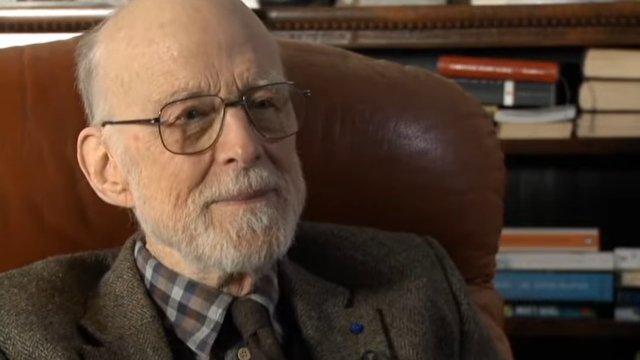
Professor Charles Anthony Richard Hoare, known as Tony to friends, has died at the age of 92. One of the greatest programmers in the early history of computing, he invented the Quicksort algorithm after a bet with his boss, later devised Hoare logic (a system for rigorously assessing the correctness of a program), and was the co-designer of ALGOL W, a programming language that would become the basis for Pascal.
Hoare was also a deeply funny, philosophical, and self-deprecating man who had a hundred other achievements to his name. On winning the Turing Award in 1980, he delivered a lecture called The Emperor's Old Clothes in which he gave a wry look back at his career's successes and failures, and used them to bemoan overly complex software and bloated systems, urging programmers to focus on simplicity and security instead.
"You know, you shouldn't trust us intelligent programmers," said Hoare in the lecture. "We can think up such good arguments for convincing ourselves and each other of the utterly absurd. Especially don't believe us when we promise to repeat an earlier success, only bigger and better next time."
Hoare invented the Quicksort algorithm at Elliott Computers after a wager with his boss in 1959. Remarkably, it remains one of the fastest ways to sort particular datasets. Here is the story of its creation, as recounted by his friend Jim Miles.
"A story that I was determined to hear from the source was the legendary Quicksort 'wager'" says Miles of one of his last visits with Hoare. "The story goes that Tony told his boss at Elliott Brothers Ltd that he knew a faster sorting algorithm than the one that he had just implemented for the company. He was told 'I bet you sixpence you don't!'. Lo and behold, Quicksort WAS faster.
"One detail I might be able to add is that I asked Tony if indeed the wager was paid out or if it had merely been a figure of speech. He confirmed that indeed he WAS paid the wager! A detail of this story that I find particularly reflective of Tony's humble personality is that he went ahead and implemented the slower algorithm he was asked to, while he believed Quicksort to be faster, and before chiming in with this belief. It speaks to a professionalism that Tony always carried."

Among Hoare's other achievements was the Communicating Sequential Process...Read more: Full article on www.pcgamer.com
What do you think about this?
When you purchase through links on our site, we may earn an affiliate commission. Here’s how it works.
Keep up to date with the most important stories and the best deals, as picked by the PC Gamer team.
You are now subscribed
Your newsletter sign-up was successful
Want to add more newsletters?
Every Friday
GamesRadar+
Your weekly update on everything you could ever want to know about the games you already love, games we know you're going to love in the near future, and tales from the communities that surround them.
Every Thursday
GTA 6 O'clock
Our special GTA 6 newsletter, with breaking news, insider info, and rumor analysis from the award-winning GTA 6 O'clock experts.
Every Friday
Knowledge
From the creators of Edge: A weekly videogame industry newsletter with analysis from expert writers, guidance from professionals, and insight into what's on the horizon.
Every Thursday
The Setup
Hardware nerds unite, sign up to our free tech newsletter for a weekly digest of the hottest new tech, the latest gadgets on the test bench, and much more.
Every Wednesday
Switch 2 Spotlight
Sign up to our new Switch 2 newsletter, where we bring you the latest talking points on Nintendo's new console each week, bring you up to date on the news, and recommend what games to play.
Every Saturday
The Watchlist
Subscribe for a weekly digest of the movie and TV news that matters, direct to your inbox. From first-look trailers, interviews, reviews and explainers, we've got you covered.
Once a month
SFX
Get sneak previews, exclusive competitions and details of special events each month!
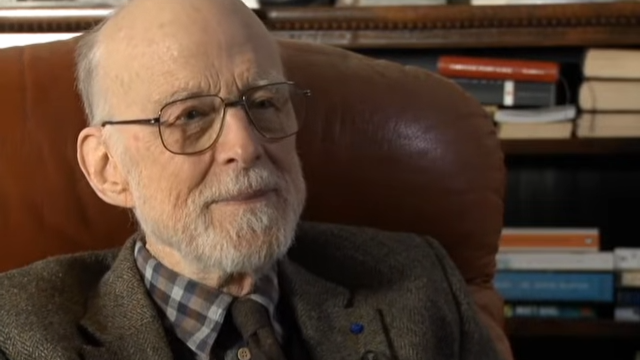
Professor Charles Anthony Richard Hoare, known as Tony to friends, has died at the age of 92. One of the greatest programmers in the early history of computing, he invented the Quicksort algorithm after a bet with his boss, later devised Hoare logic (a system for rigorously assessing the correctness of a program), and was the co-designer of ALGOL W, a programming language that would become the basis for Pascal.
Hoare was also a deeply funny, philosophical, and self-deprecating man who had a hundred other achievements to his name. On winning the Turing Award in 1980, he delivered a lecture called The Emperor's Old Clothes in which he gave a wry look back at his career's successes and failures, and used them to bemoan overly complex software and bloated systems, urging programmers to focus on simplicity and security instead.
"You know, you shouldn't trust us intelligent programmers," said Hoare in the lecture. "We can think up such good arguments for convincing ourselves and each other of the utterly absurd. Especially don't believe us when we promise to repeat an earlier success, only bigger and better next time."
Hoare invented the Quicksort algorithm at Elliott Computers after a wager with his boss in 1959. Remarkably, it remains one of the fastest ways to sort particular datasets. Here is the story of its creation, as recounted by his friend Jim Miles.
"A story that I was determined to hear from the source was the legendary Quicksort 'wager'" says Miles of one of his last visits with Hoare. "The story goes that Tony told his boss at Elliott Brothers Ltd that he knew a faster sorting algorithm than the one that he had just implemented for the company. He was told 'I bet you sixpence you don't!'. Lo and behold, Quicksort WAS faster.
"One detail I might be able to add is that I asked Tony if indeed the wager was paid out or if it had merely been a figure of speech. He confirmed that indeed he WAS paid the wager! A detail of this story that I find particularly reflective of Tony's humble personality is that he went ahead and implemented the slower algorithm he was asked to, while he believed Quicksort to be faster, and before chiming in with this belief. It speaks to a professionalism that Tony always carried."
Among Hoare's other achievements was the Communicating Sequential Process...Read more: Full article on www.pcgamer.com
What do you think about this?