
TheRetroArcade
Veteran
Posts: 9,324
Joined: Feb 2026
Joined: Feb 2026
New Zone, who dis
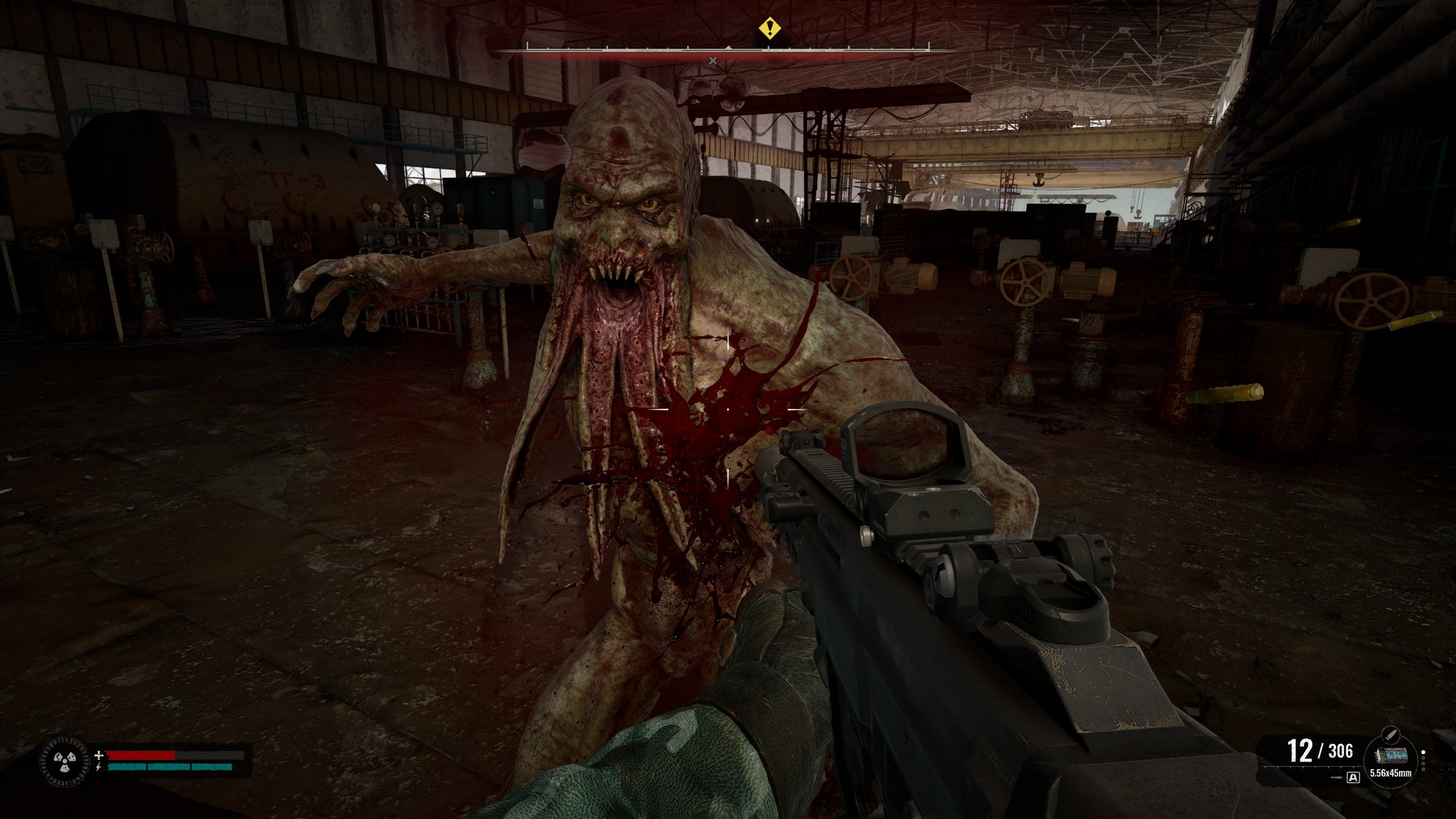
I don’t begrudge anyone who’s waited to try STALKER 2: Heart of Chornobyl until it got its technical defects fixed. They’re still wrong, obviously - an absorbing and eerily atmospheric survival FPS is still an absorbing and eerily atmospheric survival FPS when it has the structural integrity of baked beans. But it was spectacularly broken at launch, and although nearly two years of patches have swatted countless bugs and beefed up the series’ signature A-Life NPC simulation, it’s remained a heavyweight GPU-puncher on general performance.
Thank the Zone, then, for the 2.0 update, which rolls out tomorrow in tandem with the also-good Cost of Hope expansion. It ambitiously migrates STALKER 2 to a newer, sleeker version of Unreal Engine 5, and makes sweeping (though handcrafted) changes to lighting and environmental deets. Based on what I’ve played, the result is both a better-looking game and a better-performing one. So get in here, stalker - there’s never been a better time to have your skeleton melted out by an anomalous soap bubble.
S.T.A.L.K.E.R. 2: Heart of Chornobyl — Back to the Zone Showcase | Update 2.0
Watch on YouTube

Patch 2.0’s most valuable technical upgrade – or at least, its most democraticising - is the framerate boost it grants to the game’s most PC-straining areas, like faction settlements and enemy-heavy bases. For lower-end hardware in particular, this can visibly smooth out performance around areas that used to inflict the worst of STALKER 2’s chuggery, and in some cases may even be able to wring a playable game out of previously sub-30fps setups.
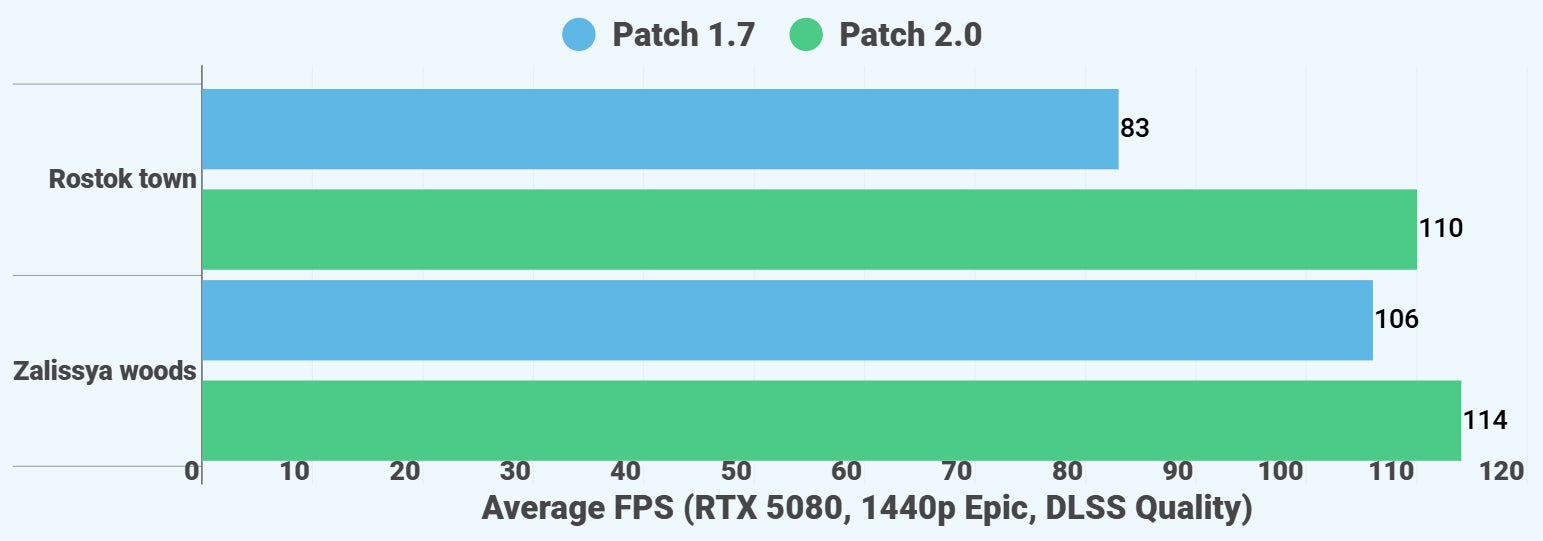
Take the humble Steam Machine, which around the bustling marketplace of the Rostok settlement, could only average 40fps at 1080p/High when running on the previous 1.7 version. The 2.0 update shot that up to 51fps, an instant 28% improvement. Beefier PCs benefit, too. My RTX 5080 test rig wasn’t wanting for frames on 1.7, averaging 83fps on Epic quality (with help from DLSS Quality upscaling to 1440p). Even so, 2.0 gave it a free 33% uplift, to 110fps.
The differences shrunk in areas that already ran as well as STALKER 2 could manage, like the quiet woods outside of starting town Zalissya. I only get a small clutch of freebie frames on the RTX 5080, while the Steam Machine budged by a single FPS. Still, when the 2.0 does make significant performance profits, they’re always going where they’re needed most.
It even makes STALKER 2 somewhat usable, kind of, maybe, on the Steam Deck. On 1.7 and prior, the best you could hope for out of Valve’s handheld was 20-30fps with FSR 3.1’s upscaling on its fastest, ugliest Ultra Performance mode: a combination that looked like the game was rendered in lead shavings rather than pixels, and didn’t even run decently in exchange. After installing patch 2.0 on my Steam Deck OLED, I was still effectively limited to all-Low settings, but STALKER 2 could now roughly average 30fps on FSR’s much cleaner-looking Performance mode. Which, not incidentally, has also been upgraded from FSR 3.1 to the generally finer FSR 4. Occasional dips into the twenties remain, and personally I’m too much of an ammo expenditure coward to risk missed headshots, so the thumbsticked, micro-GPU’d Deck hasn’t suddenly become my favourite way to play. It is, though, a much more viable one after version 2.0.
Most of the accompanying graphical touch-ups are effective as well. I only say most because looking back at some comparison screenshots, I’d be a liar and a charlatan if I said I didn’t prefer the murkier, almost sickly tint that 1.7’s artificial light sources had over the cleaner, whiter bulbs that 2.0 has installed. As if the older effects could give you a roentgen shower just by standing underneath them.
I’ll concede that the newer lighting is more sophisticated, mind, casting more accurate shadows and filtering out more convincingly into darker corners. Reflections get a polish, too – even by the time of 1.7, STALKER 2 had n...Read more: Full article on www.rockpapershotgun.com
What do you think about this?
I don’t begrudge anyone who’s waited to try STALKER 2: Heart of Chornobyl until it got its technical defects fixed. They’re still wrong, obviously - an absorbing and eerily atmospheric survival FPS is still an absorbing and eerily atmospheric survival FPS when it has the structural integrity of baked beans. But it was spectacularly broken at launch, and although nearly two years of patches have swatted countless bugs and beefed up the series’ signature A-Life NPC simulation, it’s remained a heavyweight GPU-puncher on general performance.
Thank the Zone, then, for the 2.0 update, which rolls out tomorrow in tandem with the also-good Cost of Hope expansion. It ambitiously migrates STALKER 2 to a newer, sleeker version of Unreal Engine 5, and makes sweeping (though handcrafted) changes to lighting and environmental deets. Based on what I’ve played, the result is both a better-looking game and a better-performing one. So get in here, stalker - there’s never been a better time to have your skeleton melted out by an anomalous soap bubble.
S.T.A.L.K.E.R. 2: Heart of Chornobyl — Back to the Zone Showcase | Update 2.0
Watch on YouTube
Patch 2.0’s most valuable technical upgrade – or at least, its most democraticising - is the framerate boost it grants to the game’s most PC-straining areas, like faction settlements and enemy-heavy bases. For lower-end hardware in particular, this can visibly smooth out performance around areas that used to inflict the worst of STALKER 2’s chuggery, and in some cases may even be able to wring a playable game out of previously sub-30fps setups.
Take the humble Steam Machine, which around the bustling marketplace of the Rostok settlement, could only average 40fps at 1080p/High when running on the previous 1.7 version. The 2.0 update shot that up to 51fps, an instant 28% improvement. Beefier PCs benefit, too. My RTX 5080 test rig wasn’t wanting for frames on 1.7, averaging 83fps on Epic quality (with help from DLSS Quality upscaling to 1440p). Even so, 2.0 gave it a free 33% uplift, to 110fps.
The differences shrunk in areas that already ran as well as STALKER 2 could manage, like the quiet woods outside of starting town Zalissya. I only get a small clutch of freebie frames on the RTX 5080, while the Steam Machine budged by a single FPS. Still, when the 2.0 does make significant performance profits, they’re always going where they’re needed most.
It even makes STALKER 2 somewhat usable, kind of, maybe, on the Steam Deck. On 1.7 and prior, the best you could hope for out of Valve’s handheld was 20-30fps with FSR 3.1’s upscaling on its fastest, ugliest Ultra Performance mode: a combination that looked like the game was rendered in lead shavings rather than pixels, and didn’t even run decently in exchange. After installing patch 2.0 on my Steam Deck OLED, I was still effectively limited to all-Low settings, but STALKER 2 could now roughly average 30fps on FSR’s much cleaner-looking Performance mode. Which, not incidentally, has also been upgraded from FSR 3.1 to the generally finer FSR 4. Occasional dips into the twenties remain, and personally I’m too much of an ammo expenditure coward to risk missed headshots, so the thumbsticked, micro-GPU’d Deck hasn’t suddenly become my favourite way to play. It is, though, a much more viable one after version 2.0.
Most of the accompanying graphical touch-ups are effective as well. I only say most because looking back at some comparison screenshots, I’d be a liar and a charlatan if I said I didn’t prefer the murkier, almost sickly tint that 1.7’s artificial light sources had over the cleaner, whiter bulbs that 2.0 has installed. As if the older effects could give you a roentgen shower just by standing underneath them.
I’ll concede that the newer lighting is more sophisticated, mind, casting more accurate shadows and filtering out more convincingly into darker corners. Reflections get a polish, too – even by the time of 1.7, STALKER 2 had n...Read more: Full article on www.rockpapershotgun.com
What do you think about this?