
TheRetroArcade
Veteran
Posts: 10,157
Joined: Feb 2026
Joined: Feb 2026
And not just because of the foul weather.
When you purchase through links on our site, we may earn an affiliate commission. Here’s how it works.
Silent Hill has gone international. Last year we went to Japan in Silent Hill f, and now the series is off to Scotland in Silent Hill: Townfall. As a middle-aged Scot who still remembers the '90s, when Townfall takes place, I was simultaneously nervous and excited about the rare opportunity to play a game that's so to home.
What a relief, then, that Townfall not only feels incredibly Scottish, its Scottishness also perfectly matches Silent Hill's brand of unsettling psychological horror.
It makes sense, of course. Glaswegian developer Screen Burn, formerly No Code, has been making horror games and mysteries, like Stories Untold and Observation, since 2015. Co-founder and Townfall game director Jon McKellan also worked on Alien: Isolation prior to starting up the studio.
For Screen Burn, setting Townfall in Scotland just made sense.
"We wanted St. Amelia to feel like a real place," McKellan tells me. "And I think, as with most writing, you write what you know, and it made sense for us to dig deep into our upbringings, into our past, and try and build a place that felt believable. To make the player care about this place, you need it to be believable.
We wanted St. Amelia to feel like a real place.
Walking the streets of St. Amelia is an eerie experience because it all feels so familiar. There are still so many towns in Scotland that look like this—that mix of old fashioned architecture, cosy little shops and tiny fishing vessels sitting next to modern medical clinics and parked cars. The odd new flourishes squeezing into old spaces.
Outside a shop I notice a pair of charity boxes—one in the shape of a guide dog, another a swirly wishing well that looks like a helter skelter—that nearly everyone from the UK will recognise, not just Scots. These tiny bits of window dressing make the fictional town feel like a tangible place. I have absolutely been here before, even though I definitely haven't.
"A lot of it was going back through our old memories and trying to find things that we remembered, finding old photographs," says McKellan. "But also some genius out there had scanned every Argos catalogue for the last 30 years, and we were like looking at them and finding out, OK, if we need a TV in '90s, let's look at the catalogue from the '90s and find out which one would be more appropriate."
If you want a dose of '90s shopping nostalgia, here's an Argos catalogue from 1990. Enjoy looking at decades-old lawnmowers and kitchen utensils!
Being set in the '90s also means that technology can't really save you. You don't have a miraculous smart phone in your hands, and satnav was still very new. All you have is your CRTV, a chunky portable TV—just like the one I had as a teen—that picks up fuzzy signals, which you can use to solve puzzles and see where enemies are.
"They're kind of frail, they're unreliable," says McKellan. "I think all of that speaks really well to horror because you get these tools and they help you, but they're never going to be good enough to get you out of a jam. Relying on the analogue, it allows you to play within those limitations, which work well with horror. I think aesthetically as well, it adds texture, even just to the real-world tactile interfaces that feel just a little bit more grounded. Anything we can do to make the player feel like they're there is going to help with horror."
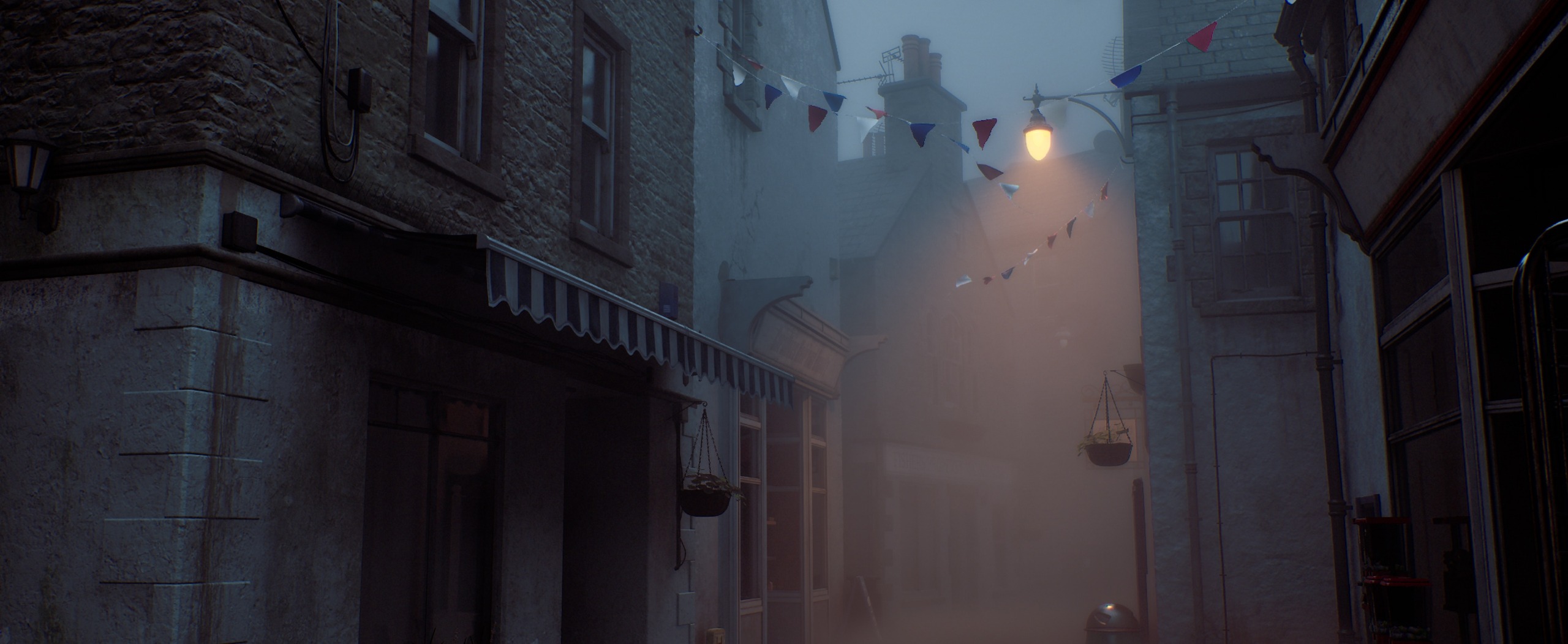
It wouldn't be an accurate portrayal of Scotland without our horrible weather, of course, which turns what would otherwise seem like an attractive, inviting town into a dour, dreich place. It's foggy and grey, the Scottish default. Normally, though, that would seem quite welcoming to me. Us Scots are a weird bunch and we're abnormally proud of our shite weather.
It wouldn't be an accurate portrayal of Scotland without our horrible weather.
It's not just because we're pe...Read more: Full article on www.pcgamer.com
What do you think about this?
When you purchase through links on our site, we may earn an affiliate commission. Here’s how it works.
Silent Hill has gone international. Last year we went to Japan in Silent Hill f, and now the series is off to Scotland in Silent Hill: Townfall. As a middle-aged Scot who still remembers the '90s, when Townfall takes place, I was simultaneously nervous and excited about the rare opportunity to play a game that's so to home.
What a relief, then, that Townfall not only feels incredibly Scottish, its Scottishness also perfectly matches Silent Hill's brand of unsettling psychological horror.
It makes sense, of course. Glaswegian developer Screen Burn, formerly No Code, has been making horror games and mysteries, like Stories Untold and Observation, since 2015. Co-founder and Townfall game director Jon McKellan also worked on Alien: Isolation prior to starting up the studio.
For Screen Burn, setting Townfall in Scotland just made sense.
"We wanted St. Amelia to feel like a real place," McKellan tells me. "And I think, as with most writing, you write what you know, and it made sense for us to dig deep into our upbringings, into our past, and try and build a place that felt believable. To make the player care about this place, you need it to be believable.
We wanted St. Amelia to feel like a real place.
Walking the streets of St. Amelia is an eerie experience because it all feels so familiar. There are still so many towns in Scotland that look like this—that mix of old fashioned architecture, cosy little shops and tiny fishing vessels sitting next to modern medical clinics and parked cars. The odd new flourishes squeezing into old spaces.
Outside a shop I notice a pair of charity boxes—one in the shape of a guide dog, another a swirly wishing well that looks like a helter skelter—that nearly everyone from the UK will recognise, not just Scots. These tiny bits of window dressing make the fictional town feel like a tangible place. I have absolutely been here before, even though I definitely haven't.
"A lot of it was going back through our old memories and trying to find things that we remembered, finding old photographs," says McKellan. "But also some genius out there had scanned every Argos catalogue for the last 30 years, and we were like looking at them and finding out, OK, if we need a TV in '90s, let's look at the catalogue from the '90s and find out which one would be more appropriate."
If you want a dose of '90s shopping nostalgia, here's an Argos catalogue from 1990. Enjoy looking at decades-old lawnmowers and kitchen utensils!
Being set in the '90s also means that technology can't really save you. You don't have a miraculous smart phone in your hands, and satnav was still very new. All you have is your CRTV, a chunky portable TV—just like the one I had as a teen—that picks up fuzzy signals, which you can use to solve puzzles and see where enemies are.
"They're kind of frail, they're unreliable," says McKellan. "I think all of that speaks really well to horror because you get these tools and they help you, but they're never going to be good enough to get you out of a jam. Relying on the analogue, it allows you to play within those limitations, which work well with horror. I think aesthetically as well, it adds texture, even just to the real-world tactile interfaces that feel just a little bit more grounded. Anything we can do to make the player feel like they're there is going to help with horror."
It wouldn't be an accurate portrayal of Scotland without our horrible weather, of course, which turns what would otherwise seem like an attractive, inviting town into a dour, dreich place. It's foggy and grey, the Scottish default. Normally, though, that would seem quite welcoming to me. Us Scots are a weird bunch and we're abnormally proud of our shite weather.
It wouldn't be an accurate portrayal of Scotland without our horrible weather.
It's not just because we're pe...Read more: Full article on www.pcgamer.com
What do you think about this?