
TheRetroArcade
Veteran
Posts: 9,456
Joined: Feb 2026
Joined: Feb 2026
The poetry of piles
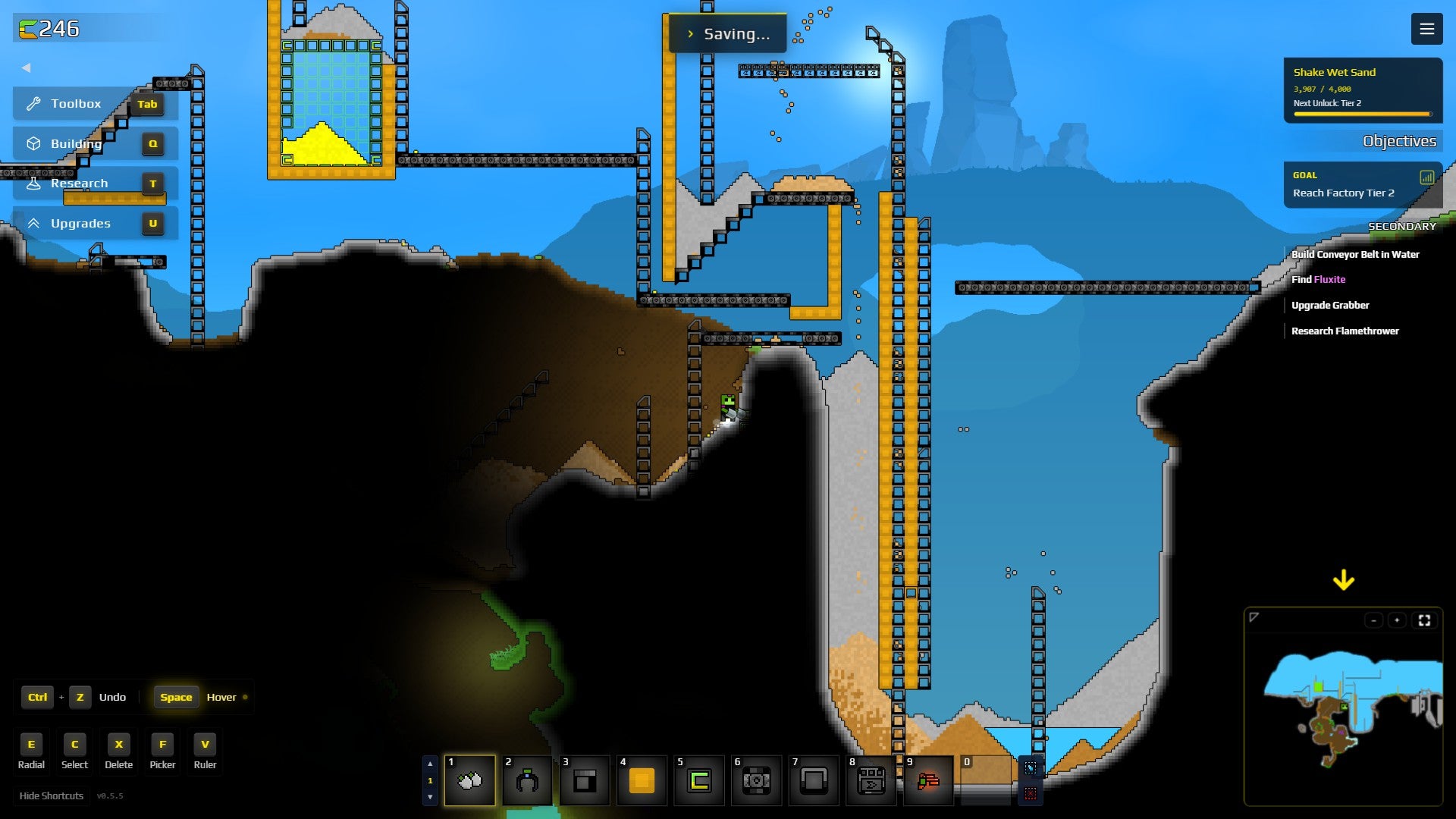
Before we talk about Sandustry, the excellent new spelunking factory builder from Lantto Games and Hooded Horse, we need to revisit that most quintessentially vidyagame of topics, the post-industrial countryside of Wales. Early on in my recent 105-mile "review" of the MSI Cyborg 14 laptop, I walked through the old slate quarries near the village of Aberllefenni – the longest continually operated slate mining setup in the world until its closure in 2003.
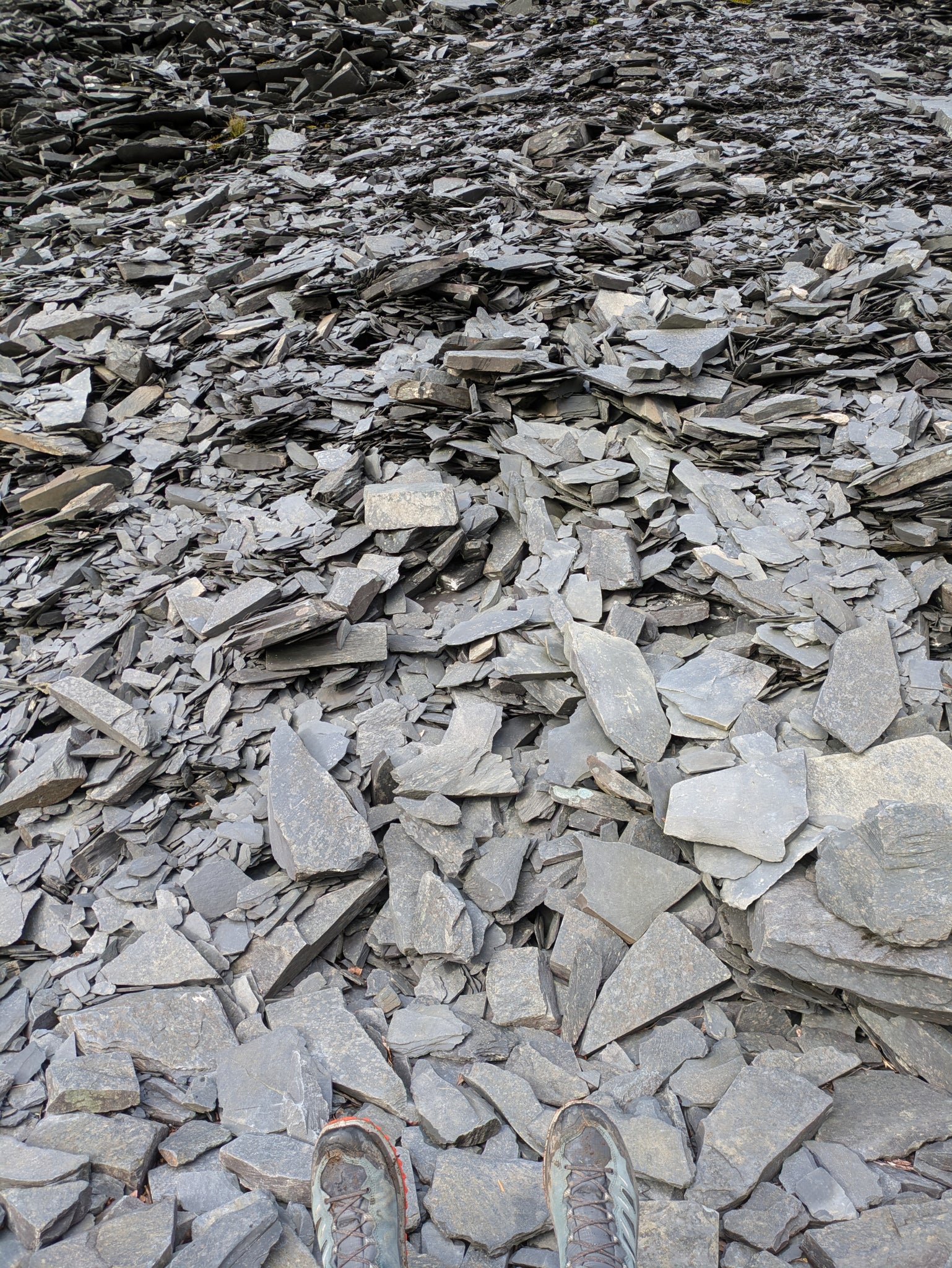
After passing some overgrown roofless cottages, I stopped for a tactical Seabrooks at the foot of a massive spoil pile: a hill of chopped and broken slate that must have begun with one man tipping over a wheelbarrow centuries ago, and then another barrow, and then another, while other men added bolsters and pounded paths through the mounting shards, until at last, their labour all but overshadowed the village beneath – a miraculously static expanse of slippery, plate-sized pieces, a geolithic coin drop machine right on the edge of paying out.
There has been huge loss of life when spoil heaps lose their shape. In 1966, coal heaps over Aberfan in South Wales collapsed after becoming saturated with rainwater, killing 144 people. Looking up at the piled slate, I felt as though I were inside a photograph of a landslide. I find it unnerving to think of spoil piles just swelling up near villages, compacting and blurring till they are naturalised as 'landscape', ultimately treated as though they were of the same order of creation as the slopes scooped out by glaciers.

Something similar happens in Sandustry, and something of the associated dread spills over into that game, mixing with the usual factory genre emotions of decreasing fuss and apocalyptic perfectionism. The game casts you as an alien prospector sent to a planet full of buried ruins, with the objective of turning all the sand into gold. Where the likes of Satisfactory play a little like survival games, with creatures to battle and constrained traversal, in Sandustry you're more of a glorified cursor, able to glide through your own buildings together with any materials you've excavated, though you'll need to dig a passage through the solid rocks beneath.
There are boss monsters down there, but no endemic smaller threats, and in the current early access build, at least, you don't need resources for construction, in itself, save for gold to unlock new types of machine. Challenge comes, instead, from the fact that the game's materials break down into pixels that have individual physics. Amongst other things, it gives great heap.
Here's how the enheapening starts: you set up a small network of conveyors and elevators to first dunk sand in water, then transport it to a line of automated sifting trays to jostle out flecks of gold. Doing this also produces a sandy residue, however, which settles like dandruff on your collection hopper. So you carelessly stretch out a stack of launchers over your sifting trays, to intercept the reside and fling it off-screen. Then you find an auspicious cave and burrow down in search of special upgrade crystals, piston-punching your way into luminous caverns, while gold tinkles into the counter on your HUD. You return after a few moments, and find that your gold-mining operation now cowers beside a rising mountain of debris.
Sandustry is probably the first factory game I've played that really communicates the physicality of industrial waste, the appalling magnificence of it, for all the dinkiness of its 2D artstyle. It's the only factory game that really makes me think of post-industrial landscapes, like those colossal spoil piles above Aberllefenni. It also engineers a weird exuberance inside the concept of 'byproduct'.
Factory games pretty much always simulate the effects of excessive production, but the representation of these things is often clinically organised by the HUD and interface design – spreadsheets full of scrapmetal icons, neatly blocked-out 3D storage palle...Read more: Full article on www.rockpapershotgun.com
What do you think about this?
Before we talk about Sandustry, the excellent new spelunking factory builder from Lantto Games and Hooded Horse, we need to revisit that most quintessentially vidyagame of topics, the post-industrial countryside of Wales. Early on in my recent 105-mile "review" of the MSI Cyborg 14 laptop, I walked through the old slate quarries near the village of Aberllefenni – the longest continually operated slate mining setup in the world until its closure in 2003.
After passing some overgrown roofless cottages, I stopped for a tactical Seabrooks at the foot of a massive spoil pile: a hill of chopped and broken slate that must have begun with one man tipping over a wheelbarrow centuries ago, and then another barrow, and then another, while other men added bolsters and pounded paths through the mounting shards, until at last, their labour all but overshadowed the village beneath – a miraculously static expanse of slippery, plate-sized pieces, a geolithic coin drop machine right on the edge of paying out.
There has been huge loss of life when spoil heaps lose their shape. In 1966, coal heaps over Aberfan in South Wales collapsed after becoming saturated with rainwater, killing 144 people. Looking up at the piled slate, I felt as though I were inside a photograph of a landslide. I find it unnerving to think of spoil piles just swelling up near villages, compacting and blurring till they are naturalised as 'landscape', ultimately treated as though they were of the same order of creation as the slopes scooped out by glaciers.
Something similar happens in Sandustry, and something of the associated dread spills over into that game, mixing with the usual factory genre emotions of decreasing fuss and apocalyptic perfectionism. The game casts you as an alien prospector sent to a planet full of buried ruins, with the objective of turning all the sand into gold. Where the likes of Satisfactory play a little like survival games, with creatures to battle and constrained traversal, in Sandustry you're more of a glorified cursor, able to glide through your own buildings together with any materials you've excavated, though you'll need to dig a passage through the solid rocks beneath.
There are boss monsters down there, but no endemic smaller threats, and in the current early access build, at least, you don't need resources for construction, in itself, save for gold to unlock new types of machine. Challenge comes, instead, from the fact that the game's materials break down into pixels that have individual physics. Amongst other things, it gives great heap.
Here's how the enheapening starts: you set up a small network of conveyors and elevators to first dunk sand in water, then transport it to a line of automated sifting trays to jostle out flecks of gold. Doing this also produces a sandy residue, however, which settles like dandruff on your collection hopper. So you carelessly stretch out a stack of launchers over your sifting trays, to intercept the reside and fling it off-screen. Then you find an auspicious cave and burrow down in search of special upgrade crystals, piston-punching your way into luminous caverns, while gold tinkles into the counter on your HUD. You return after a few moments, and find that your gold-mining operation now cowers beside a rising mountain of debris.
Sandustry is probably the first factory game I've played that really communicates the physicality of industrial waste, the appalling magnificence of it, for all the dinkiness of its 2D artstyle. It's the only factory game that really makes me think of post-industrial landscapes, like those colossal spoil piles above Aberllefenni. It also engineers a weird exuberance inside the concept of 'byproduct'.
Factory games pretty much always simulate the effects of excessive production, but the representation of these things is often clinically organised by the HUD and interface design – spreadsheets full of scrapmetal icons, neatly blocked-out 3D storage palle...Read more: Full article on www.rockpapershotgun.com
What do you think about this?