
TheRetroArcade
Veteran
Posts: 11,758
Joined: Feb 2026
Joined: Feb 2026
Is this your card?
In Dreadline Express, you play a character who awakes in the cabin of a carriage on the last human train. It hurtles down the track, bathed in the red light of an alien sky. At the windows of the carriage, eldritch tentacles press themselves against the glass. A voice crackles at the speaker, it announces that you've been selected by lottery. You're to be sacrificed for the greater good. The message signs off "All hail the Supreme Engineer".
It's an ominous beginning, but the best is still to come: Dreadline Express has a mechanic that quickly made it my favourite thing I played at Gamescom.
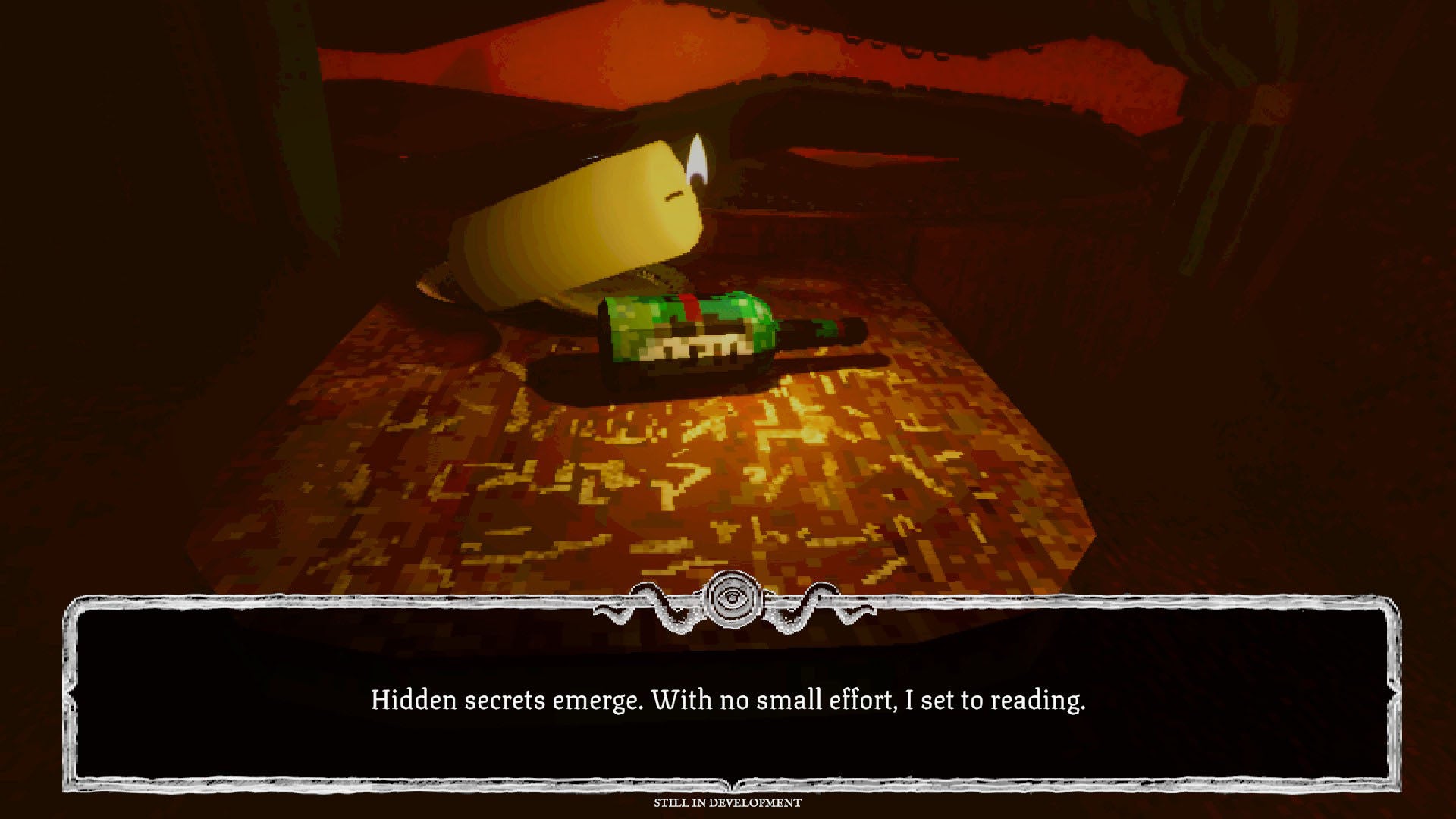
Searching around your cabin, you find the tools to make your escape, and they're an unusual kit. As you observe things in Dreadline Express's world, you're rewarded with tarot-like cards. Interact with the burning candle illuminating the room and you'll receive a card titled 'Light'. The cabin's table is covered in scratches that are too dark to inspect, but if you hold the light card in your hand and interact with the table, your character picks up a nearby candle and reads the carvings. They're a memorial for a girl called Theresa Mather. The discovery unlocks a memory and you receive another card, this one marked 'Daughter'. A book beside the door tells of a woman called Rose Mather who died on the train, it's a diary entry from her daughter desperately trying not to forget her. After you read the entry, you receive the card 'Wife'. Under the cabin's bench is a suitcase with a combination lock. Yet, if you hold both the 'Mother' and 'Daughter' card in your hand and interact with the suitcase, you enter their birth years and the case pops open. Inside is a medical kit and documents that reveal your identity, Samuel Mather, and you receive the 'Apothecary' card.

These card mechanics are entertaining when used on simple inanimate objects, like those in the cabin, but it's a system that swells with life when you escape the cabin and meet the other passengers.
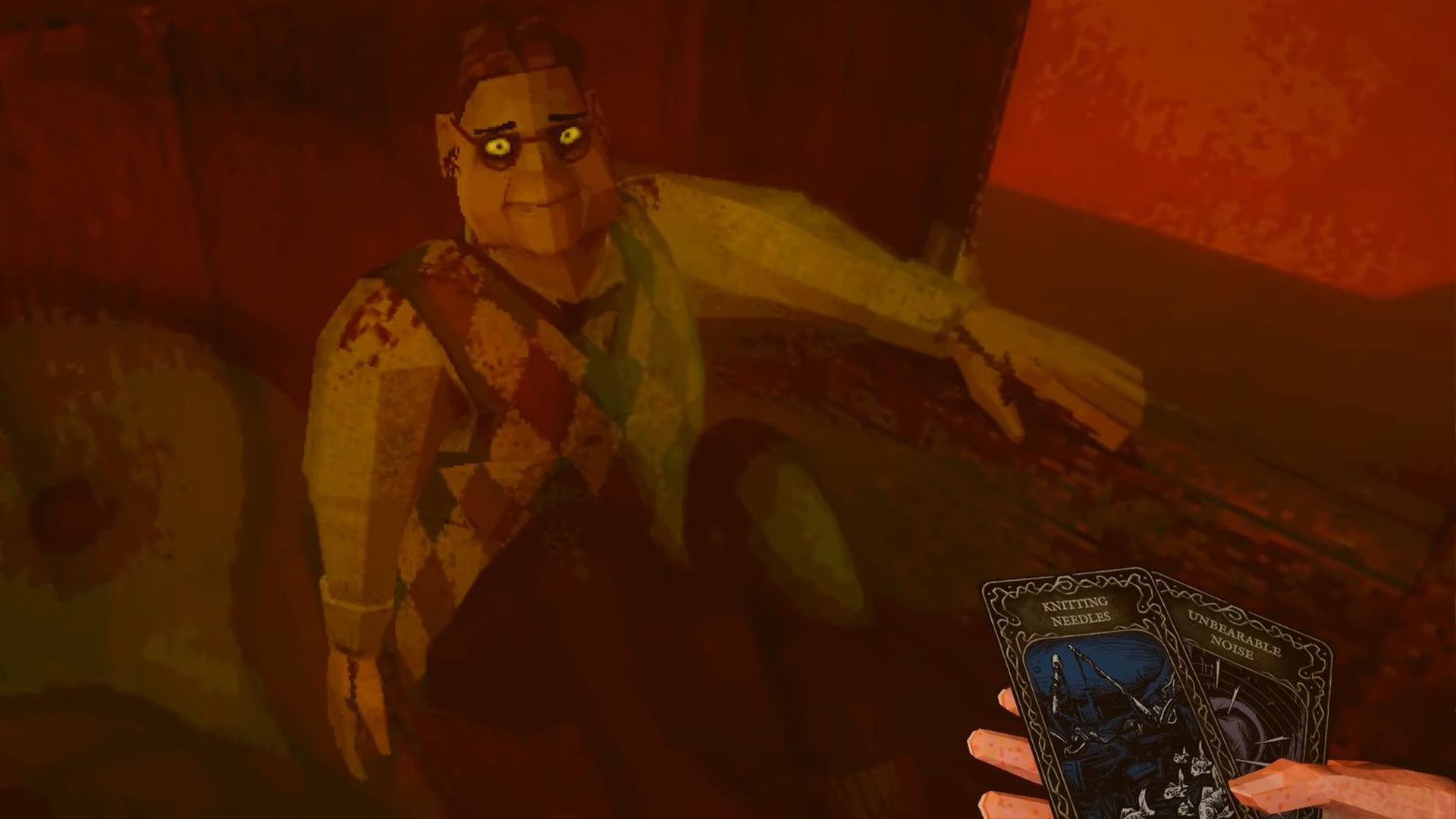
In the hallway outside your room, an old man sits at a table surrounded by empty bottles. Inspecting the bottles, I'm rewarded with a card. But, when I question the man, prompting him with the bottle card, he refuses to answer. "You haven't spoken to me during our entire journey," he replies. "Now you won't even introduce yourself and you demand something from me?". I shuffle through my cards and select the Apothecary card, the one I found with my identity documents. "My pleasure Samuel," he says, shaking my hand. He tells me his name is Garret Willcott, and he used to be a judge, and I receive a new card about him. I combine the Apothecary card with the Wife card and Willcott's responds that I am lucky to remember them. I swap the Apothecary card for the Judge card and it turns the action into a question about the Judge's family.
On the surface, the cards are such a simple device, but there's a wonderful richness to them. With every new card I find, I expand my vocabulary and my ability to question the world. I can form new questions, discover new depths in conversation, prompt new revelations. It reminds me of searching the database of the dusty computer archive in Her Story. Sam Barlow's deduction game was one of the first games where I felt I was having something to a conversation with a character, because while you were ostensibly typing keywords into a search engine to see if they appeared in a police interview transcript, implicit in that query was that you were forming a question and you were asking it of the interviewee. Typing the word 'Murder' evoked a reply, even if the form of that reply was interview clips where they spoke the word, it was provoked by the a query I formed, it wasn't just a dialogue option picked from a list. Dreadline Express captures that same thrill.
Unlike Her Story, however, where you are unearthing a story that has already happened, in Dreadline Express, the narrative is not yet set. The questions and actions you take ...Read more: Full article on www.rockpapershotgun.com
What do you think about this?
In Dreadline Express, you play a character who awakes in the cabin of a carriage on the last human train. It hurtles down the track, bathed in the red light of an alien sky. At the windows of the carriage, eldritch tentacles press themselves against the glass. A voice crackles at the speaker, it announces that you've been selected by lottery. You're to be sacrificed for the greater good. The message signs off "All hail the Supreme Engineer".
It's an ominous beginning, but the best is still to come: Dreadline Express has a mechanic that quickly made it my favourite thing I played at Gamescom.
Searching around your cabin, you find the tools to make your escape, and they're an unusual kit. As you observe things in Dreadline Express's world, you're rewarded with tarot-like cards. Interact with the burning candle illuminating the room and you'll receive a card titled 'Light'. The cabin's table is covered in scratches that are too dark to inspect, but if you hold the light card in your hand and interact with the table, your character picks up a nearby candle and reads the carvings. They're a memorial for a girl called Theresa Mather. The discovery unlocks a memory and you receive another card, this one marked 'Daughter'. A book beside the door tells of a woman called Rose Mather who died on the train, it's a diary entry from her daughter desperately trying not to forget her. After you read the entry, you receive the card 'Wife'. Under the cabin's bench is a suitcase with a combination lock. Yet, if you hold both the 'Mother' and 'Daughter' card in your hand and interact with the suitcase, you enter their birth years and the case pops open. Inside is a medical kit and documents that reveal your identity, Samuel Mather, and you receive the 'Apothecary' card.
These card mechanics are entertaining when used on simple inanimate objects, like those in the cabin, but it's a system that swells with life when you escape the cabin and meet the other passengers.
In the hallway outside your room, an old man sits at a table surrounded by empty bottles. Inspecting the bottles, I'm rewarded with a card. But, when I question the man, prompting him with the bottle card, he refuses to answer. "You haven't spoken to me during our entire journey," he replies. "Now you won't even introduce yourself and you demand something from me?". I shuffle through my cards and select the Apothecary card, the one I found with my identity documents. "My pleasure Samuel," he says, shaking my hand. He tells me his name is Garret Willcott, and he used to be a judge, and I receive a new card about him. I combine the Apothecary card with the Wife card and Willcott's responds that I am lucky to remember them. I swap the Apothecary card for the Judge card and it turns the action into a question about the Judge's family.
On the surface, the cards are such a simple device, but there's a wonderful richness to them. With every new card I find, I expand my vocabulary and my ability to question the world. I can form new questions, discover new depths in conversation, prompt new revelations. It reminds me of searching the database of the dusty computer archive in Her Story. Sam Barlow's deduction game was one of the first games where I felt I was having something to a conversation with a character, because while you were ostensibly typing keywords into a search engine to see if they appeared in a police interview transcript, implicit in that query was that you were forming a question and you were asking it of the interviewee. Typing the word 'Murder' evoked a reply, even if the form of that reply was interview clips where they spoke the word, it was provoked by the a query I formed, it wasn't just a dialogue option picked from a list. Dreadline Express captures that same thrill.
Unlike Her Story, however, where you are unearthing a story that has already happened, in Dreadline Express, the narrative is not yet set. The questions and actions you take ...Read more: Full article on www.rockpapershotgun.com
What do you think about this?