
TheRetroArcade
Veteran
Posts: 12,196
Joined: Feb 2026
Joined: Feb 2026
The performance is there, the experience is great, but the price is utterly punitive when you compare against dedicated gaming laptops.
When you purchase through links on our site, we may earn an affiliate commission. Here’s how it works.
Well, here it is, Nvidia's all-in-one silicon, the RTX Spark. This is an SoC that's being promoted as the everything chip; the processor that can be all things to all people. It's a creator's chip, it's an AI-lover's chip, and it's a gamer's chip.
But all three of those kinds of people do need to have one thing in common: they need to be rather well off, because this is also an expensive chip. I spoke about it when the pricing first came to light last week, while I was at the launch event for this Windows-based tech. Even the cheapest of the RTX Spark machines coming our way will cost $2,700, and that will only get you the weaker cores, a paltry 24 GB of unified memory, and a 512 GB SSD.
That is certainly a limitation, but also completely expected in a time where all things PC cost a ludicrous amount of money, especially devices which are locked into requiring a colossal amount of memory to do their main task. Which, let's be honest here, is AI.
The unified memory architecture (UMA) of the RTX Spark is perfectly suited to providing a ton of memory for system resources, but also to be able to switch that over to supporting the GPU when it comes to smashing through local AI workloads which fill up the GPU's memory pool. It's the perfect time for Nvidia to release something like this, because local AI is set for a bit of an explosion in popularity (especially when the cloud services start charging real money for their services), but it's also the worst time because this sort of memory-heavy hardware is expensive.
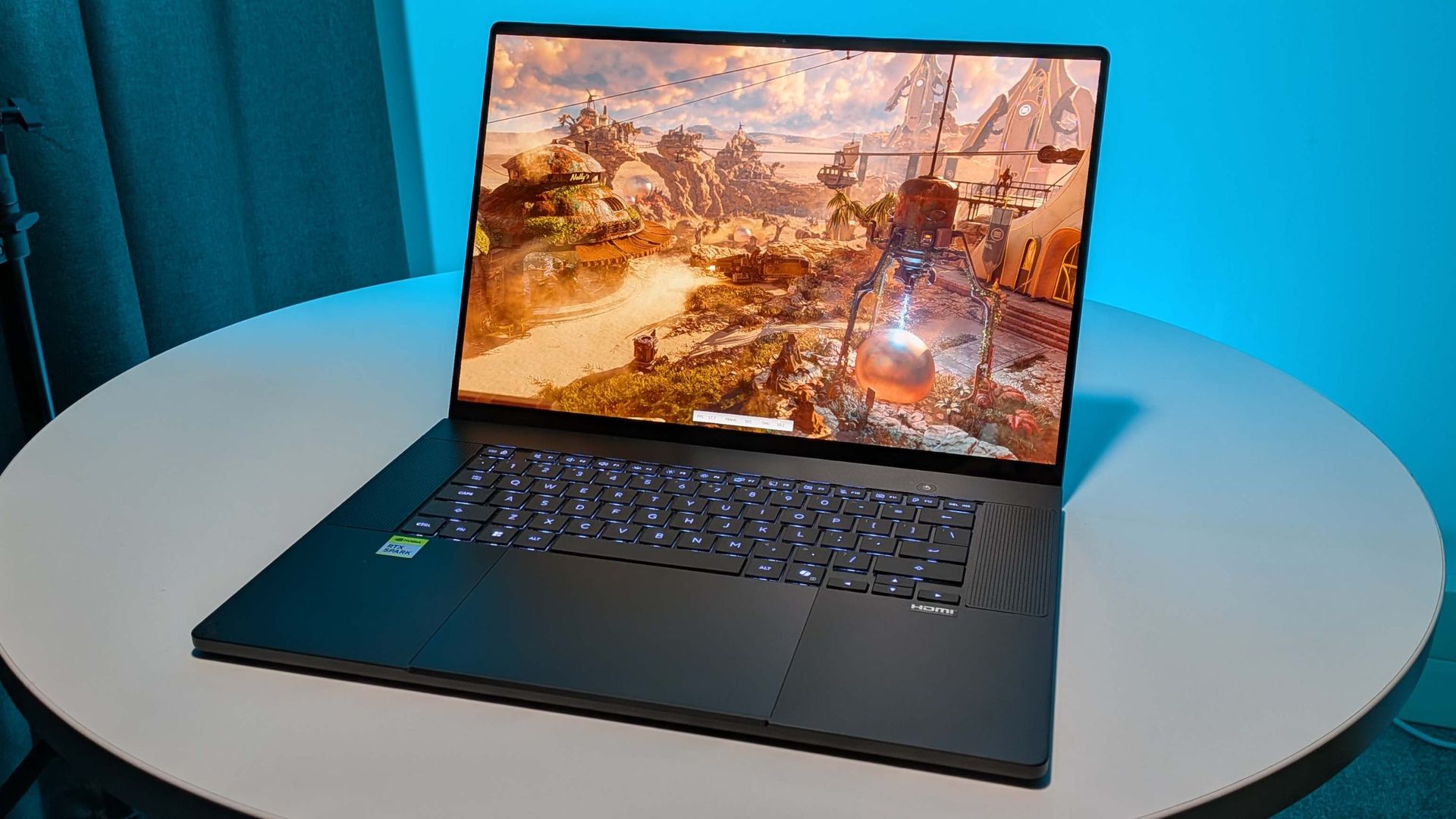
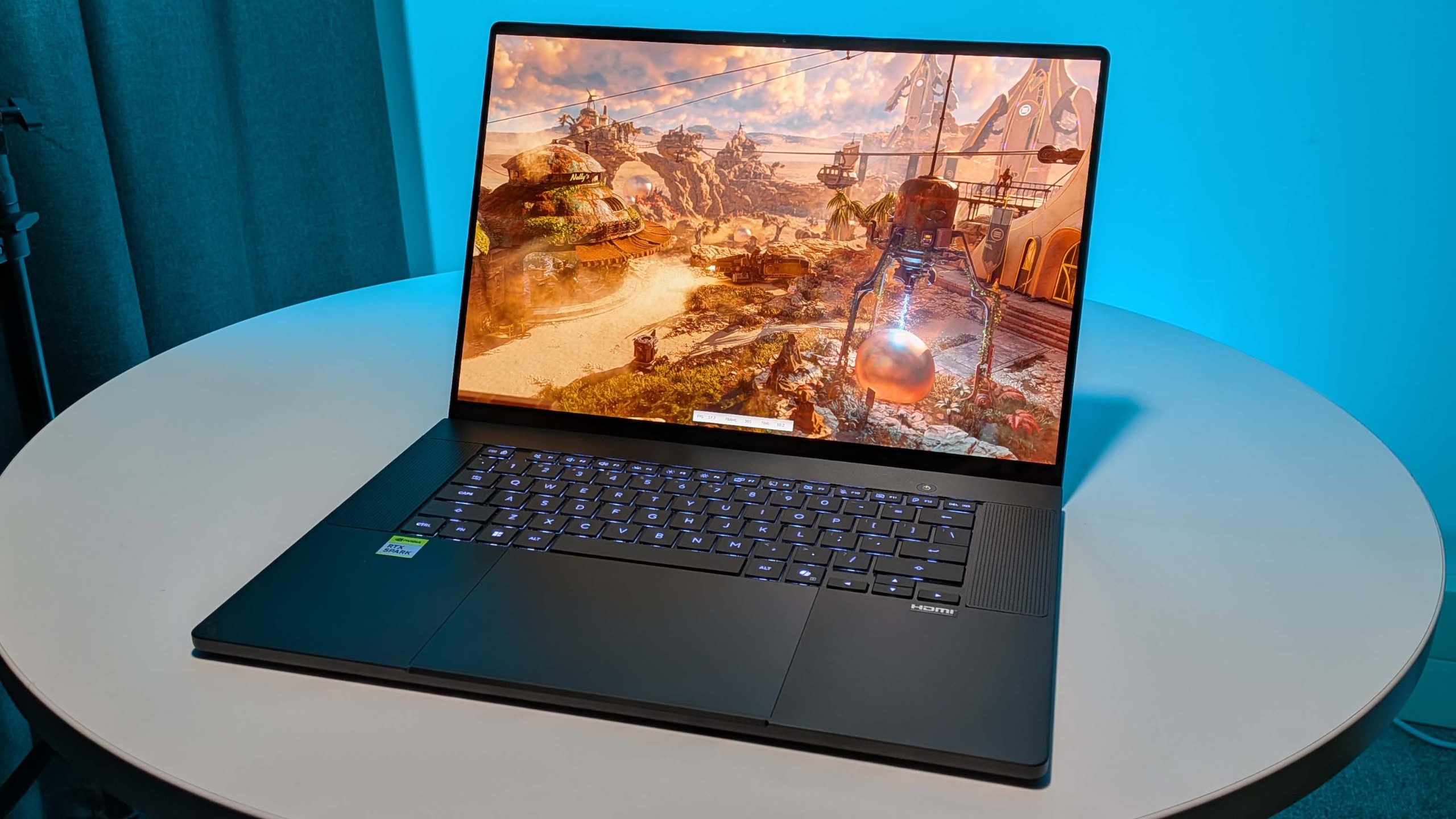
But here it is in front of me, an RTX Spark laptop that looks for all the world like the slimline MacBook-esque Razer Blade machines I've loved for years. But this is no Blade, this is an Asus ProArt P16 and it's a stunner. Thinner than the Zephyrus G16 with a sleek aluminium body and a 64 GB, 20-core RTX Spark N1X chip inside it.
From the get-go I can say that this is not a platform I can really recommend to the average PC gamer
I've only been using it a short time, and there is so much to it and so much that is going to change over the next few months that I'm only really going to scratch the surface here. But today I'm going to go over the architecture and the gaming performance, and maybe I'll give you a little bit about my adventures in agentic AI as a palate cleanser later on.
Yet, even having spent under a week with an RTX Spark as my daily driver, I think from the get-go I can probably say that this is not a platform I can really recommend to the average PC gamer. It's too expensive and we're better served by the gaming laptops already on the market. But, it is an absolutely fascinating, and genuinely impressive platform, and could be a real glimpse at the future of PCs and laptops as a whole.
The PC Gamer Circuit Breaker newsletter breaks down the latest PC gaming tech, and finds you the best deals on the best products
I've been waiting for this moment for a long time. The promise of an all-Nvidia gaming laptop has been a tantalising prospect for years now; even before the company tried to buy Arm itself there were rumours of an SoC that would combine Arm cores with Nvidia's powerful GPU silicon.
AMD's had its own APUs for the longest time, and Intel has been running every facet of a laptop since the dark ages. So it's no surprise Nvidia wanted a piece of that pie.
And with Qualcomm taking the initial Windows-on-Arm hit with its Snapdragon Elite and Plus chips, letting the OS evolve around the early teething troubles, the time is now ripe for Nvidia's platform to come to fruition.
Actually, there is no Windows-on-Arm anymore as Microsoft is ditching the suffix and just calling it Windows, because Microsoft is all-in here, too. To be honest, I think that's largely ...Read more: Full article on www.pcgamer.com
What do you think about this?
When you purchase through links on our site, we may earn an affiliate commission. Here’s how it works.
Well, here it is, Nvidia's all-in-one silicon, the RTX Spark. This is an SoC that's being promoted as the everything chip; the processor that can be all things to all people. It's a creator's chip, it's an AI-lover's chip, and it's a gamer's chip.
But all three of those kinds of people do need to have one thing in common: they need to be rather well off, because this is also an expensive chip. I spoke about it when the pricing first came to light last week, while I was at the launch event for this Windows-based tech. Even the cheapest of the RTX Spark machines coming our way will cost $2,700, and that will only get you the weaker cores, a paltry 24 GB of unified memory, and a 512 GB SSD.
That is certainly a limitation, but also completely expected in a time where all things PC cost a ludicrous amount of money, especially devices which are locked into requiring a colossal amount of memory to do their main task. Which, let's be honest here, is AI.
The unified memory architecture (UMA) of the RTX Spark is perfectly suited to providing a ton of memory for system resources, but also to be able to switch that over to supporting the GPU when it comes to smashing through local AI workloads which fill up the GPU's memory pool. It's the perfect time for Nvidia to release something like this, because local AI is set for a bit of an explosion in popularity (especially when the cloud services start charging real money for their services), but it's also the worst time because this sort of memory-heavy hardware is expensive.
But here it is in front of me, an RTX Spark laptop that looks for all the world like the slimline MacBook-esque Razer Blade machines I've loved for years. But this is no Blade, this is an Asus ProArt P16 and it's a stunner. Thinner than the Zephyrus G16 with a sleek aluminium body and a 64 GB, 20-core RTX Spark N1X chip inside it.
From the get-go I can say that this is not a platform I can really recommend to the average PC gamer
I've only been using it a short time, and there is so much to it and so much that is going to change over the next few months that I'm only really going to scratch the surface here. But today I'm going to go over the architecture and the gaming performance, and maybe I'll give you a little bit about my adventures in agentic AI as a palate cleanser later on.
Yet, even having spent under a week with an RTX Spark as my daily driver, I think from the get-go I can probably say that this is not a platform I can really recommend to the average PC gamer. It's too expensive and we're better served by the gaming laptops already on the market. But, it is an absolutely fascinating, and genuinely impressive platform, and could be a real glimpse at the future of PCs and laptops as a whole.
The PC Gamer Circuit Breaker newsletter breaks down the latest PC gaming tech, and finds you the best deals on the best products
I've been waiting for this moment for a long time. The promise of an all-Nvidia gaming laptop has been a tantalising prospect for years now; even before the company tried to buy Arm itself there were rumours of an SoC that would combine Arm cores with Nvidia's powerful GPU silicon.
AMD's had its own APUs for the longest time, and Intel has been running every facet of a laptop since the dark ages. So it's no surprise Nvidia wanted a piece of that pie.
And with Qualcomm taking the initial Windows-on-Arm hit with its Snapdragon Elite and Plus chips, letting the OS evolve around the early teething troubles, the time is now ripe for Nvidia's platform to come to fruition.
Actually, there is no Windows-on-Arm anymore as Microsoft is ditching the suffix and just calling it Windows, because Microsoft is all-in here, too. To be honest, I think that's largely ...Read more: Full article on www.pcgamer.com
What do you think about this?