
TheRetroArcade
Veteran
Posts: 10,271
Joined: Feb 2026
Joined: Feb 2026
DLSS Neural Rendering is being developed hard in the modding community.
When you purchase through links on our site, we may earn an affiliate commission. Here’s how it works.
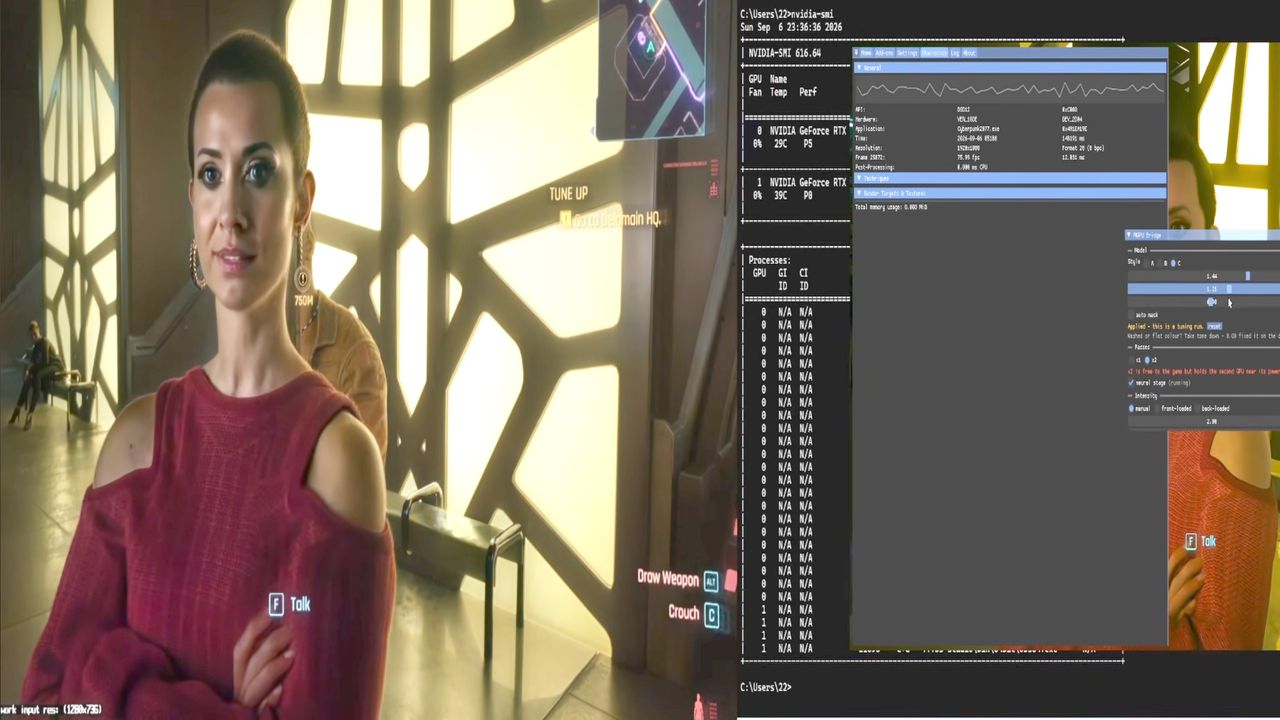
A developer has vibe-coded a new ReShade add-on file that offloads the DLSS Neural Rendering workloads to a second GPU, almost negating the otherwise massive DLSS NR performance hit. Given the original DLSS 5 shots we saw when Jen-Hsun first showed off the feature around GDC and GTC in the Spring were running on two graphics cards, that's not wholly surprising, but this mod certainly does open the the potential for keeping your old GPU around for neural coprocessing in the future.
Like almost all of the current DLSS 5/Neural Rendering implementations we've seen where the user gets to pick the game, the model, and the weight of the effects, the Neural Coprocessor add-on file—mgpu_bridge—is designed for ReShade, an app used to inject different visual effects into PC games. The files exist on Github, can be downloaded and added into a game that's already been modded with DLSS 5 support, and could dramatically improve the performance.
This is, for me, the biggest issue with both the homebrew mods for DLSS Neural Rendering and the only release implementation we've seen from Nvidia and the developers themselves: the hefty performance penalty from turning it on.
Nvidia itself has touted a 50 - 60% frame rate hit as a blanket figure—regardless of game and how much AI filtering it's doing—as what it is expecting to see from enabling DLSS NR. Andy benchmarked NBA 2K27 ahead of launch and found that sometimes the frame rate impact can be even higher than that.
I mean, it's not as bad as when you try and run DLSS NR on AMD GPUs, but I've noted these kinds of performance hits when you run the new feature through ReShade, too. But Marcelo Guibout has coded a ReShade add-on file that allows a second GPU—here an RTX 5060 Ti 16 GB—to take the final finished frame and perform the neural rendering pass on that GPU and output on its own monitor. That means it doesn't have to hand the frame back, which adds its own performance hit and latency.
They initially used a local model—Qwen3.8-27B-Q6_K—running on LM Studio using the same pair of RTX 5060 Ti 16 GB cards they eventually tested the feature on. This created the "initial add-on scaffold" which they then took into Claude to write most of the C++ core, though Anthropic's AI "also produced several confident, well-formatted, wrong diagnoses along the way."
Looking through the Github documentation Guibout makes it clear this is not a production-ready add-on, and is mostly presented for further research and development. They note it has been run on exactly one machine with three games, and encourage everyone to read the source code before running the files. But it's still a really interesting development in the DLSS 5 modding story.
The PC Gamer Circuit Breaker newsletter breaks down the latest PC gaming tech, and finds you the best deals on the best products
"The reason it is worth doing: neural post-processing saturates whatever device it runs on," writes Guibout. "Run it on the render GPU and lowering your render resolution just frees capacity the neural stage immediately eats, so upscaling stops paying for itself. Move it to a second GPU and the render GPU is genuinely freed."
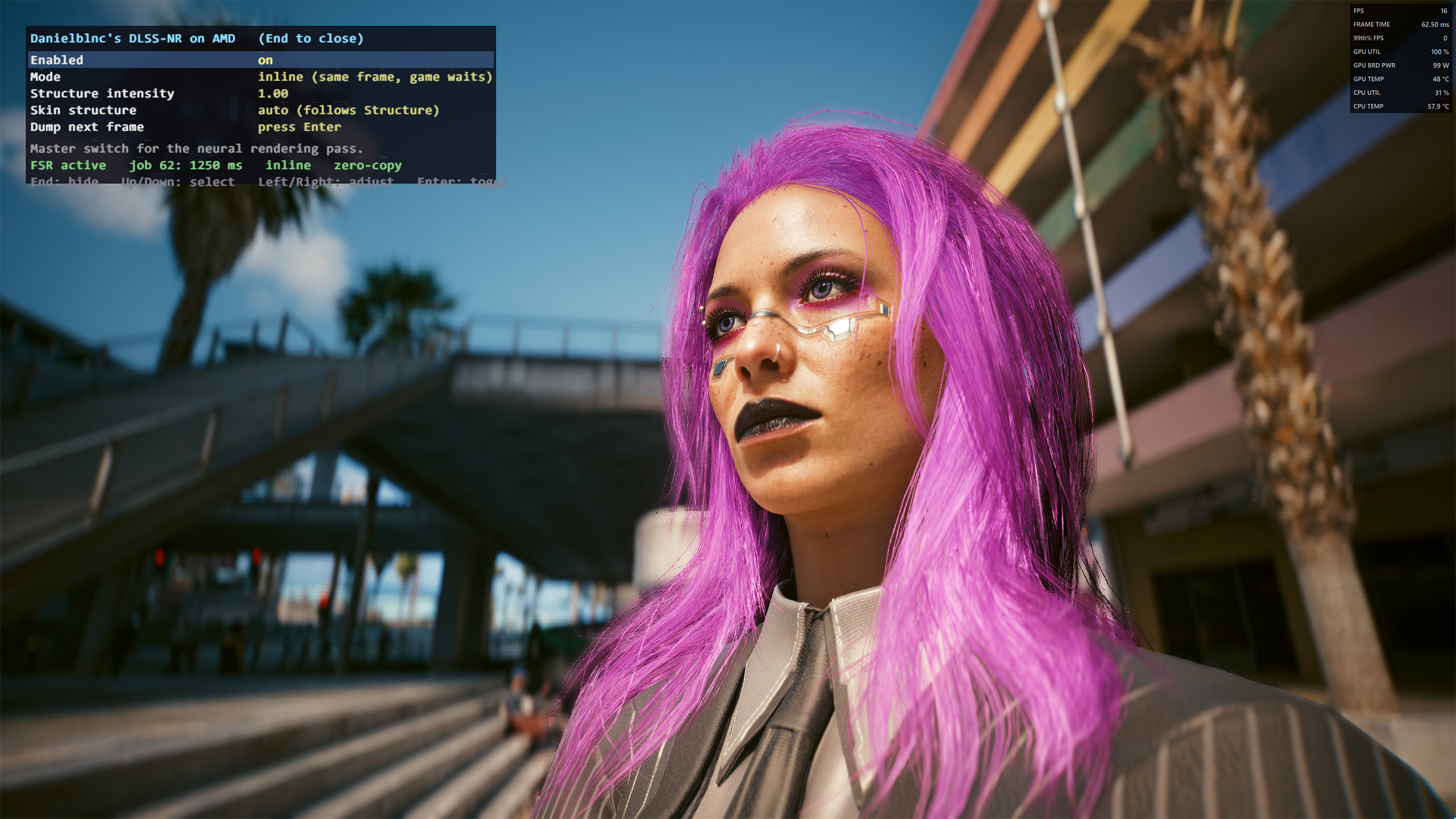
AMD GPUs running DLSS 5 looks great, but runs horribly.
This is almost certainly the reason behind Nvidia originally running the feature on two GPUs for the original demos, and the fact that it can get it running on a single GPU is still impressive from a technical perspective, but having a coprocessor handling the load should give you the best of both worlds.
Though there are obvious caveats to this.
The first being that it's expensive enough to buy one graphics card right now. You look at this mod and the fact it's been created and tested on a pair of RTX 5060 Ti cards and think that's kinda mid-range. They are the fifth-tier cards of N...Read more: Full article on www.pcgamer.com
What do you think about this?
When you purchase through links on our site, we may earn an affiliate commission. Here’s how it works.
A developer has vibe-coded a new ReShade add-on file that offloads the DLSS Neural Rendering workloads to a second GPU, almost negating the otherwise massive DLSS NR performance hit. Given the original DLSS 5 shots we saw when Jen-Hsun first showed off the feature around GDC and GTC in the Spring were running on two graphics cards, that's not wholly surprising, but this mod certainly does open the the potential for keeping your old GPU around for neural coprocessing in the future.
Like almost all of the current DLSS 5/Neural Rendering implementations we've seen where the user gets to pick the game, the model, and the weight of the effects, the Neural Coprocessor add-on file—mgpu_bridge—is designed for ReShade, an app used to inject different visual effects into PC games. The files exist on Github, can be downloaded and added into a game that's already been modded with DLSS 5 support, and could dramatically improve the performance.
This is, for me, the biggest issue with both the homebrew mods for DLSS Neural Rendering and the only release implementation we've seen from Nvidia and the developers themselves: the hefty performance penalty from turning it on.
Nvidia itself has touted a 50 - 60% frame rate hit as a blanket figure—regardless of game and how much AI filtering it's doing—as what it is expecting to see from enabling DLSS NR. Andy benchmarked NBA 2K27 ahead of launch and found that sometimes the frame rate impact can be even higher than that.
I mean, it's not as bad as when you try and run DLSS NR on AMD GPUs, but I've noted these kinds of performance hits when you run the new feature through ReShade, too. But Marcelo Guibout has coded a ReShade add-on file that allows a second GPU—here an RTX 5060 Ti 16 GB—to take the final finished frame and perform the neural rendering pass on that GPU and output on its own monitor. That means it doesn't have to hand the frame back, which adds its own performance hit and latency.
They initially used a local model—Qwen3.8-27B-Q6_K—running on LM Studio using the same pair of RTX 5060 Ti 16 GB cards they eventually tested the feature on. This created the "initial add-on scaffold" which they then took into Claude to write most of the C++ core, though Anthropic's AI "also produced several confident, well-formatted, wrong diagnoses along the way."
Looking through the Github documentation Guibout makes it clear this is not a production-ready add-on, and is mostly presented for further research and development. They note it has been run on exactly one machine with three games, and encourage everyone to read the source code before running the files. But it's still a really interesting development in the DLSS 5 modding story.
The PC Gamer Circuit Breaker newsletter breaks down the latest PC gaming tech, and finds you the best deals on the best products
"The reason it is worth doing: neural post-processing saturates whatever device it runs on," writes Guibout. "Run it on the render GPU and lowering your render resolution just frees capacity the neural stage immediately eats, so upscaling stops paying for itself. Move it to a second GPU and the render GPU is genuinely freed."
AMD GPUs running DLSS 5 looks great, but runs horribly.
This is almost certainly the reason behind Nvidia originally running the feature on two GPUs for the original demos, and the fact that it can get it running on a single GPU is still impressive from a technical perspective, but having a coprocessor handling the load should give you the best of both worlds.
Though there are obvious caveats to this.
The first being that it's expensive enough to buy one graphics card right now. You look at this mod and the fact it's been created and tested on a pair of RTX 5060 Ti cards and think that's kinda mid-range. They are the fifth-tier cards of N...Read more: Full article on www.pcgamer.com
What do you think about this?