
TheRetroArcade
Veteran
Posts: 10,163
Joined: Feb 2026
Joined: Feb 2026
10x multiplier
A careful balance of monster-bashing, brain teasing, and money making that thoughtfully improves on its predecessor in almost every detail.
The Moonlighter games cast you as Will, a dungeoneer-merchant hybrid, delving into randomly shifting combat arenas by night and selling the treasures you unearth there by day. In the dungeons, you fight various monsters and beasties and are then offered upgrades to your combat build or a handful of relics you must fit in your bag. In the shop, you figure out how to get the best price for these items. And then you spend that money on upgrades that help you to dungeon delve better and start all over again.
All this time, you will be thinking about multipliers.

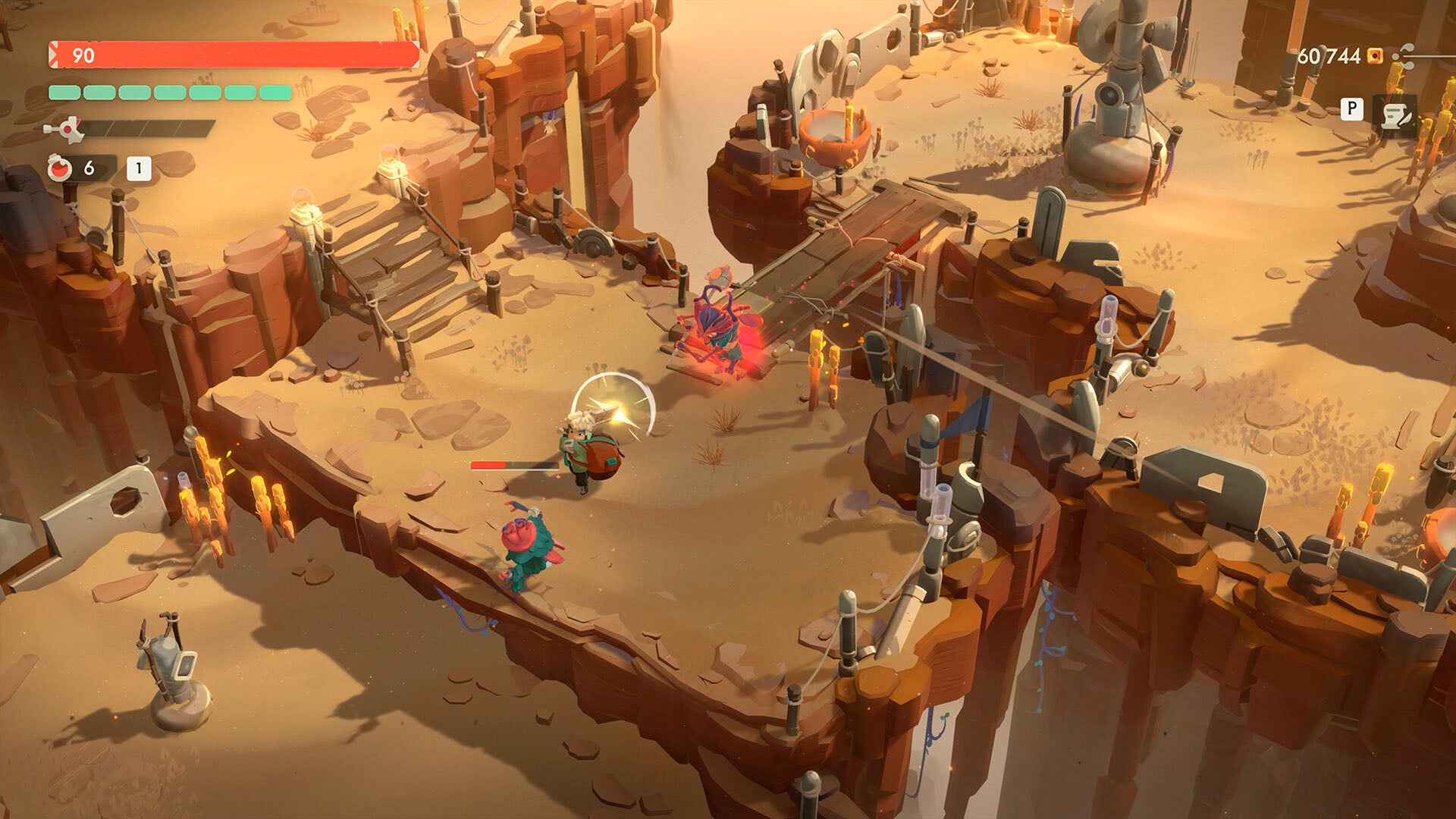
The least complicated version of these multipliers is in combat, so let’s start there. You can choose between one of four weapons, each of which has an attack and a special, and you always have a gun and, of course, your trusty backpack which you can use to whack stunned enemies out of the level. These steps come together into excellent choreography, especially as you develop your build further into the dungeon. You might, for instance, unlock a perk that means your attack does extra damage after you shoot something, or one that gives you a spot of healing whenever you knock an enemy off the level with your backpack, or one that adds fire damage to your basic attack, and so no two dances are quite the same. But overall you’ll find a familiar core and the extra damage will be a perk rather than a necessity.
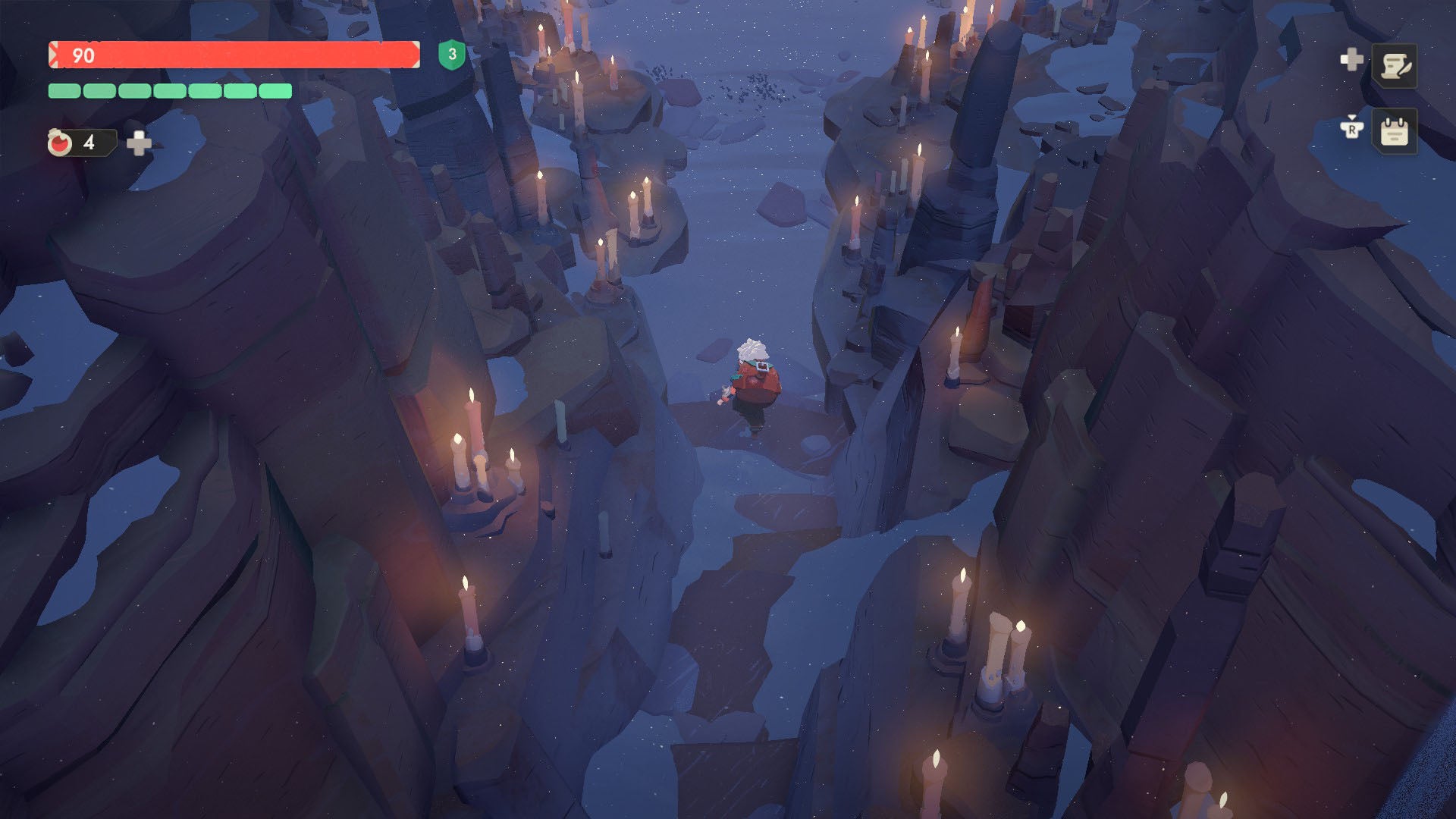
The combat in Moonlighter 2 isn’t especially difficult, and death, though rare, isn’t punishing either. Will has a pendant he can use to whisk himself out of danger, but if you mistime it and bite the dust your treasures will simply lose half of their quality. And it's these quality points where the real multiplicative tricks come in. Many items have rules that activate when you place them in your bag. An item might double the value of the treasure in the slot to its left or, conversely, it may destroy it. Puzzling out where to slot an item to maximise the value of your combined loot is key. Complicating matters is the fact that in each of the three (six if you include variants) themed dungeons, items placed in your bag may have additional specific effects on other items. In the museum, for example, electrocuting and repairing treasures will add to their quality, and other items may provide cascading effects, such as adding to the quality of everything in the bag when adjacent to a shocked item. Placement and timing become extremely important, building a puzzly breather into every few dungeon chambers.
Once you escape with these varying-quality treasures, the multiplication only gets more complicated. Will must figure out the price people will pay for an item in his store, but they can be persuaded to shell out much, much more than its base value depending on what furniture is present in the shop, what perks you’ve unlocked using your trusty robotic chest, and what adorable teacup-pig like mascot you’ve decided to pet that day. It is extremely satisfying to spend an entire dungeon run pumping up the quality of an item and then place it perfectly to make tens of thousands of gold pieces.
And you’ll need every one of them, because Will is fighting to buy his home back. The events of Moonlighter are recapped very briefly at the beginning of the game, and the entire story of Moonlighter 2 is very light touch, but there’s enough there to provide a decent scaffold of meaning to what would otherwise be a straightforward bit of number going up. The overarching quests being “make a whole bunch of cash” helps to keep the game ticking along at a steady rhythm and spaces out upgrades to the various shops around the village who exist in symbiotic relationship to you, providing potions and weapon upgrades and such. As you need to make more and more money, you can pour it into them, and they’ll help you make even more money, a...Read more: Full article on www.rockpapershotgun.com
What do you think about this?
A careful balance of monster-bashing, brain teasing, and money making that thoughtfully improves on its predecessor in almost every detail.
The Moonlighter games cast you as Will, a dungeoneer-merchant hybrid, delving into randomly shifting combat arenas by night and selling the treasures you unearth there by day. In the dungeons, you fight various monsters and beasties and are then offered upgrades to your combat build or a handful of relics you must fit in your bag. In the shop, you figure out how to get the best price for these items. And then you spend that money on upgrades that help you to dungeon delve better and start all over again.
All this time, you will be thinking about multipliers.
The least complicated version of these multipliers is in combat, so let’s start there. You can choose between one of four weapons, each of which has an attack and a special, and you always have a gun and, of course, your trusty backpack which you can use to whack stunned enemies out of the level. These steps come together into excellent choreography, especially as you develop your build further into the dungeon. You might, for instance, unlock a perk that means your attack does extra damage after you shoot something, or one that gives you a spot of healing whenever you knock an enemy off the level with your backpack, or one that adds fire damage to your basic attack, and so no two dances are quite the same. But overall you’ll find a familiar core and the extra damage will be a perk rather than a necessity.
The combat in Moonlighter 2 isn’t especially difficult, and death, though rare, isn’t punishing either. Will has a pendant he can use to whisk himself out of danger, but if you mistime it and bite the dust your treasures will simply lose half of their quality. And it's these quality points where the real multiplicative tricks come in. Many items have rules that activate when you place them in your bag. An item might double the value of the treasure in the slot to its left or, conversely, it may destroy it. Puzzling out where to slot an item to maximise the value of your combined loot is key. Complicating matters is the fact that in each of the three (six if you include variants) themed dungeons, items placed in your bag may have additional specific effects on other items. In the museum, for example, electrocuting and repairing treasures will add to their quality, and other items may provide cascading effects, such as adding to the quality of everything in the bag when adjacent to a shocked item. Placement and timing become extremely important, building a puzzly breather into every few dungeon chambers.
Once you escape with these varying-quality treasures, the multiplication only gets more complicated. Will must figure out the price people will pay for an item in his store, but they can be persuaded to shell out much, much more than its base value depending on what furniture is present in the shop, what perks you’ve unlocked using your trusty robotic chest, and what adorable teacup-pig like mascot you’ve decided to pet that day. It is extremely satisfying to spend an entire dungeon run pumping up the quality of an item and then place it perfectly to make tens of thousands of gold pieces.
And you’ll need every one of them, because Will is fighting to buy his home back. The events of Moonlighter are recapped very briefly at the beginning of the game, and the entire story of Moonlighter 2 is very light touch, but there’s enough there to provide a decent scaffold of meaning to what would otherwise be a straightforward bit of number going up. The overarching quests being “make a whole bunch of cash” helps to keep the game ticking along at a steady rhythm and spaces out upgrades to the various shops around the village who exist in symbiotic relationship to you, providing potions and weapon upgrades and such. As you need to make more and more money, you can pour it into them, and they’ll help you make even more money, a...Read more: Full article on www.rockpapershotgun.com
What do you think about this?