
TheRetroArcade
Veteran
Posts: 12,851
Joined: Feb 2026
Joined: Feb 2026
The past and fiddly present of the Xbox controller's ancestor
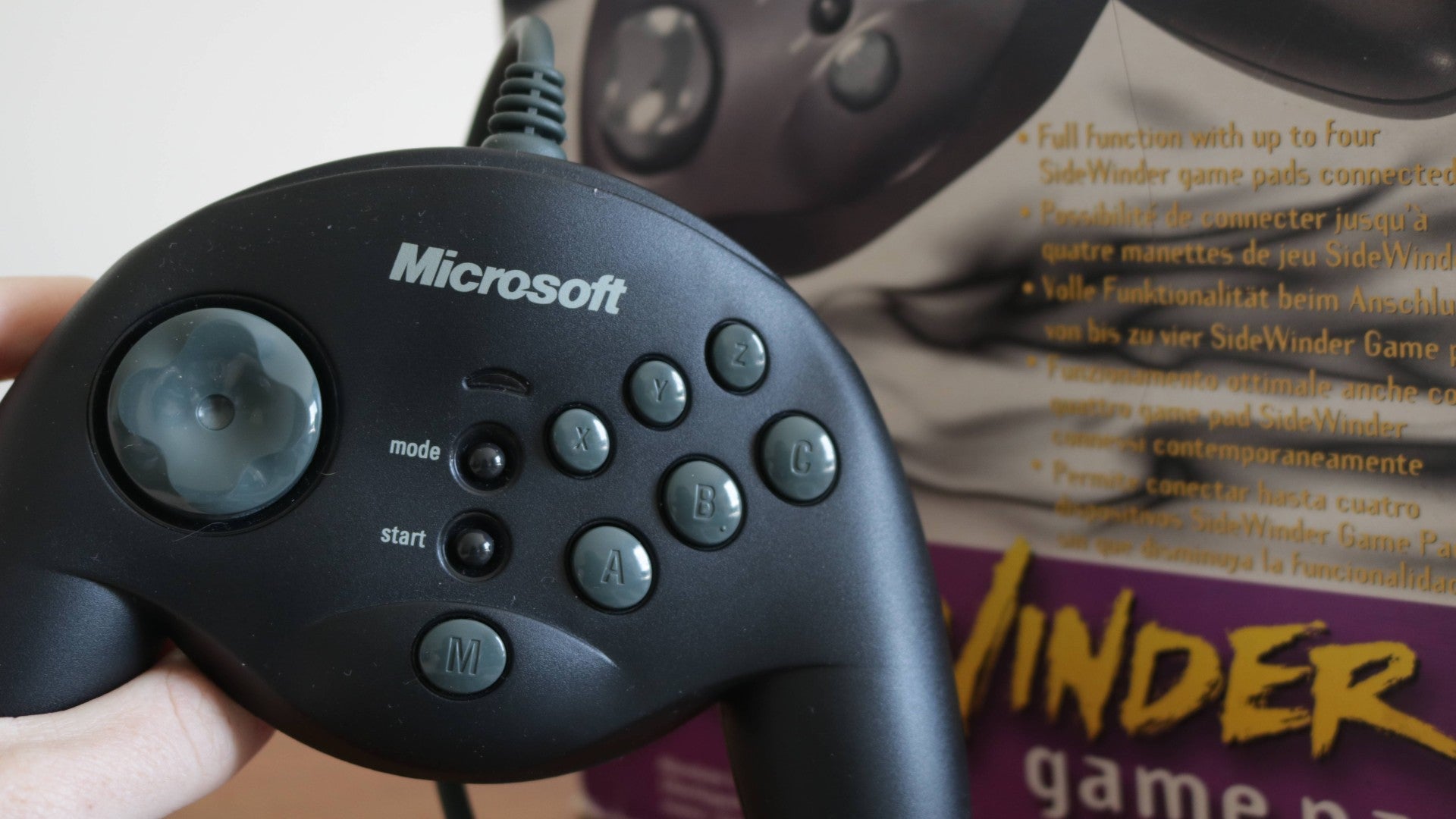
1996 gave us two incredible gifts. The first was me. The second, arguably more impactful on the course of human civilisation, was the Microsoft SideWinder Game Pad 1.0.
Chances are you might not have heard of the SideWinder brand. Launched in 1995 with the 3D Pro and Standard joysticks, the hardware family would eventually comprise gamepads, racing wheels, a game voice device to talk with friends and vocally control your game, and a massive mouse with more buttons than my nana’s vest. A genuinely cool collection of peripherals.
However, and perhaps prophetic of how they would eventually set about dismantling a gaming industry they had helped built, Microsoft shuttered the SideWinder brand in 2003, supposedly due to poor sales. An especially funny comment, in hindsight, came from Microsoft Canada’s then marketing manager, Kim McWhinnie:
"While SideWinder devices are very popular, the majority of PC games today are built for a mouse and keyboard interface.”
Well before the yacht-printing success of the Steam Deck and handheld PC gaming, a significant chunk of PC players have long preferred the feel and functionality of a controller. Although the SideWinder name enjoyed a brief resurrection in 2007 with the release of the SideWinder Mouse, and later the SideWinder X6 and X4 keyboards, the gamepad side of the brand would never again see another product, with Microsoft instead opting for PC-compatible versions of their Xbox controllers.
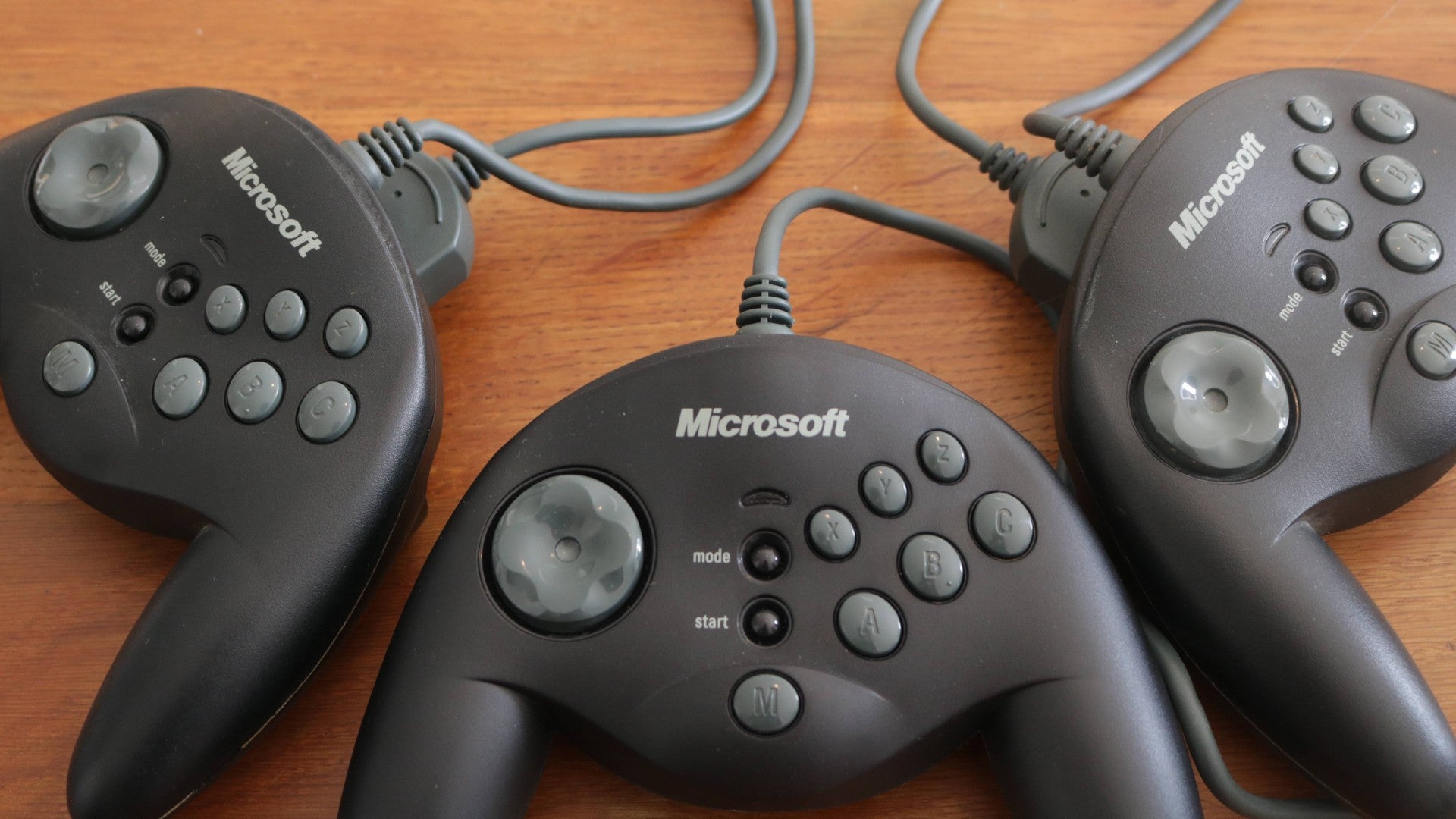
Which bring us to 2026. While making my weekly car boot excursion, the fates conspired to bring me and the SideWinder Game Pad 1.0 together, in the form of a nice old lady asking for 2 euros. Bonafide hardware history, for that little cash? I was sold, and determined to see how a controller from the 90s might stand up to PCs and games of the 21st century.
Sadly, the initial feel of the controller isn’t great. The shell is cut from cheap plastic that sits awkwardly in my hands. Rather than a thumbstick, the controller boasts this odd circular D-Pad that allows for eight directional movement, though the diagonals are notably harder to press. The triggers give a nice clicking sound, but they feel far too thin to enjoy pushing down. The buttons are fine, though the press is much too soft for my thumb-tastes.
The controller does appear to have built with the idea of 'serious gaming' in mind. For instance, the pad comes bundled with software allowing for the creation of macros that can then be deployed at the push of the big M on the controller. Other interesting details include the early design choices that would eventually be mimicked on the first Xbox controller, the "Duke". The omni-directional D-Pad and the triple button rows make their debut here, though the size of the controller is much more in line with the later "Controller S" model, which shed much of the Duke’s girth.
The SideWinder also came with a rather neat 'pass through' port, allowing owners to connect additional SideWinder controllers through the initial controller, daisy chaining up to a total of four. Sadly, I lacked the friends necessary to examine this aspect, so you’ll have to make do with the purely imaginary scenario of securing victory by pulling on your controller hard enough to yank everyone else’s to the ground. Which, if nothing else, shows Microsoft really understood their target audience.
There's no denying the power of old controllers to provoke fond memories in the handler, nor their continued popularity in the modern day - as evident in Nintendo's production of imitation Gamecube and NES pads for the Switch 2. With growing preferences for emulation in the face of bankrupting retro game prices, many either go for custom controllers with modern functionality, or original peripherals connected via adapters, in order to preserve as much of the original experience as possible. But can the same be said for the SideWinder?
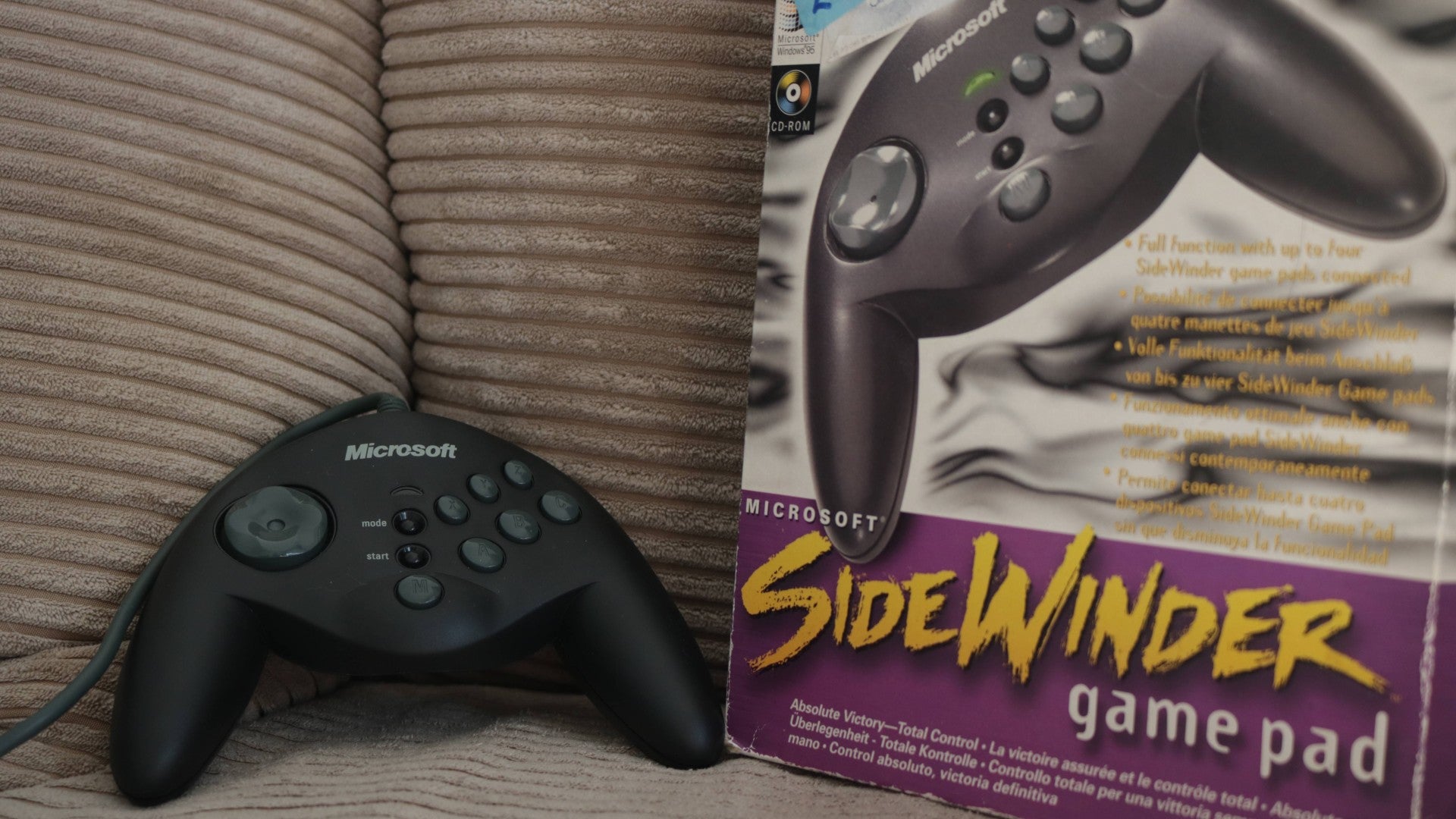
While I tracked down an old TV ...Read more: Full article on www.rockpapershotgun.com
What do you think about this?
1996 gave us two incredible gifts. The first was me. The second, arguably more impactful on the course of human civilisation, was the Microsoft SideWinder Game Pad 1.0.
Chances are you might not have heard of the SideWinder brand. Launched in 1995 with the 3D Pro and Standard joysticks, the hardware family would eventually comprise gamepads, racing wheels, a game voice device to talk with friends and vocally control your game, and a massive mouse with more buttons than my nana’s vest. A genuinely cool collection of peripherals.
However, and perhaps prophetic of how they would eventually set about dismantling a gaming industry they had helped built, Microsoft shuttered the SideWinder brand in 2003, supposedly due to poor sales. An especially funny comment, in hindsight, came from Microsoft Canada’s then marketing manager, Kim McWhinnie:
"While SideWinder devices are very popular, the majority of PC games today are built for a mouse and keyboard interface.”
Well before the yacht-printing success of the Steam Deck and handheld PC gaming, a significant chunk of PC players have long preferred the feel and functionality of a controller. Although the SideWinder name enjoyed a brief resurrection in 2007 with the release of the SideWinder Mouse, and later the SideWinder X6 and X4 keyboards, the gamepad side of the brand would never again see another product, with Microsoft instead opting for PC-compatible versions of their Xbox controllers.
Which bring us to 2026. While making my weekly car boot excursion, the fates conspired to bring me and the SideWinder Game Pad 1.0 together, in the form of a nice old lady asking for 2 euros. Bonafide hardware history, for that little cash? I was sold, and determined to see how a controller from the 90s might stand up to PCs and games of the 21st century.
Sadly, the initial feel of the controller isn’t great. The shell is cut from cheap plastic that sits awkwardly in my hands. Rather than a thumbstick, the controller boasts this odd circular D-Pad that allows for eight directional movement, though the diagonals are notably harder to press. The triggers give a nice clicking sound, but they feel far too thin to enjoy pushing down. The buttons are fine, though the press is much too soft for my thumb-tastes.
The controller does appear to have built with the idea of 'serious gaming' in mind. For instance, the pad comes bundled with software allowing for the creation of macros that can then be deployed at the push of the big M on the controller. Other interesting details include the early design choices that would eventually be mimicked on the first Xbox controller, the "Duke". The omni-directional D-Pad and the triple button rows make their debut here, though the size of the controller is much more in line with the later "Controller S" model, which shed much of the Duke’s girth.
The SideWinder also came with a rather neat 'pass through' port, allowing owners to connect additional SideWinder controllers through the initial controller, daisy chaining up to a total of four. Sadly, I lacked the friends necessary to examine this aspect, so you’ll have to make do with the purely imaginary scenario of securing victory by pulling on your controller hard enough to yank everyone else’s to the ground. Which, if nothing else, shows Microsoft really understood their target audience.
There's no denying the power of old controllers to provoke fond memories in the handler, nor their continued popularity in the modern day - as evident in Nintendo's production of imitation Gamecube and NES pads for the Switch 2. With growing preferences for emulation in the face of bankrupting retro game prices, many either go for custom controllers with modern functionality, or original peripherals connected via adapters, in order to preserve as much of the original experience as possible. But can the same be said for the SideWinder?
While I tracked down an old TV ...Read more: Full article on www.rockpapershotgun.com
What do you think about this?