
TheRetroArcade
Veteran
Posts: 13,378
Joined: Feb 2026
Joined: Feb 2026
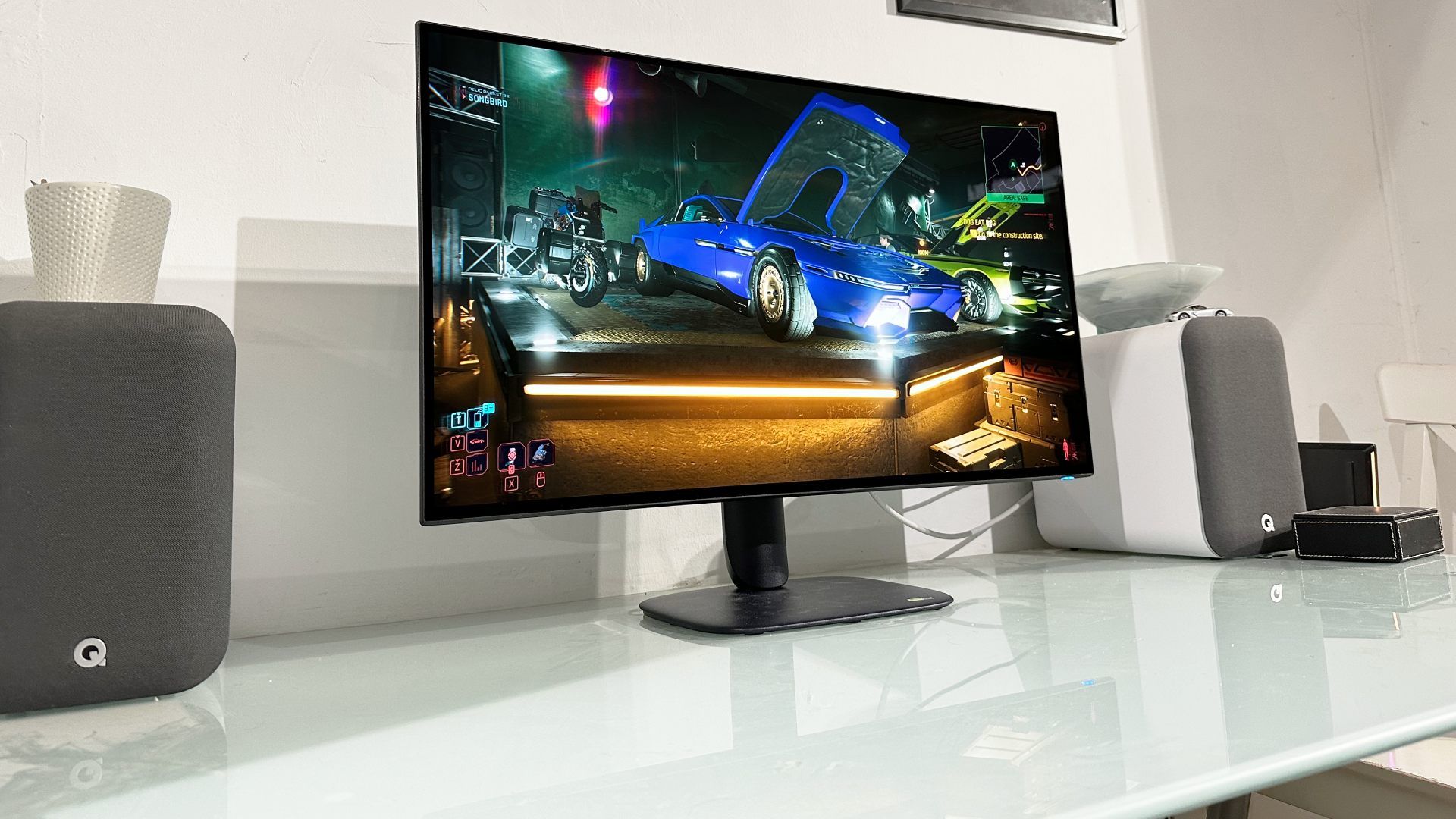
When it comes to monitors, Alienware increasingly has a habit of undercutting the competition. The new Alienware AW3226Q is no exception, offering LG's stunning new 4K RGB-stripe Tandem OLED panel for by far the lowest price yet.
PC Gamer's got your back
Our experienced team dedicates many hours to every review, to really get to the heart of what matters most to you. Find out more about how we evaluate games and hardware.
You know Alienware's 5K2K 39-inch ultrawide OLED gaming monitor beast, the AW3926QW, the one I reviewed the other day? It's an absolute beauty, probably my favourite current PC monitor, save for one niggly flaw. But what if you fancy something similar, but cheaper and in a more conventional 32-inch 4K form factor? Well, give it up for the new Alienware AW3226Q, because it ticks all those boxes.
Notably, it sports exactly the same LG Tandem WOLED panel tech as its bigger 39-inch sibling. That includes being the latest RGB-stripe variant of that new LG OLED panel generation that everyone is going bananas for.
Well, it's nearly the same. For reasons that aren't entirely clear, this 32-inch 4K panel clocks in at 250 nits full-screen brightness and 1,000 nits peak HDR. The aforementioned 39 incher rocks 300 nits and 1,300 nits figures for the same metrics, respectively.
Screen size
32-inch
Resolution
3,840 x 2,160
Brightness
250 nits full screen, 1,000 nits peak HDR
Response time
0.03 ms
Refresh rate
165 Hz @ 4K
HDR
DisplayHDR True Black 400
Features
LG Tandem WOLED RGB-stripe panel, 2x HDMI 2.1, DisplayPort 1.4, USB-A/C hub, 3.5mm audio
Price
$699 | £649
✅ You're an OLED purist: LG's new RGB-stripe WOLED tech offers beautifully neutral colours.
❌ You want the brightest possible OLED experience: This version of LG's Tandem WOLED panel technology takes a small brightness hit.
As it happens, the numbers for this 32-inch 4K model are actually more in line with expectations for this panel type. The thing is, with all previous WOLED panel generations, LG used a white subpixel to boost brightness.
This new pure RGB-stripe—or red, green, blue—item ditches the white subpixel in favour of pixel precision and improved colour volume. But that comes with a cost in terms of peak brightness.
Even the 39-inch AW3926QW is a little dimmer than the RGWB version of LG's latest Tandem OLED monitor panel tech, where the "W" in "RGWB" indicates the added white subpixel. Oh, and just for clarity, the "W" in "WOLED" has always referred to the white colour of the light produced by the emissive OLED material in all of the subpixels, rather than the added white subpixels in all previous WOLED monitor generations prior to the newest RGB-stripe variants. Baffling, but there you go.
Anywho, monitors with RGWB Tandem OLED panels, including the Asus ROG Strix XG32UQWMS I reviewed recently, tend to weigh in around 330 nits full-screen and 1,500 nits peak HDR. So the 39-inch 5K2K RGB-stripe panel gives less away in terms of brightness than expected, and in turn this new 32-inch 4K model is pretty much where you'd expect it to be.
The PC Gamer Circuit Breaker newsletter breaks down the latest PC gaming tech, and finds you the best deals on the best products
Got all that? Then it's also worth understanding that those brightness figures can be misleading. Like I said, LG has been including a fourth white subpixel in all of its previous WOLED monitor panel generations to boost brightness. But that doesn't automatically boost colour brightness. At least it can't while maintaining colour volume.
That's why Samsung's competing QD-OLED panels, as also used by a wide variety of monitor makers including Alienware, have often looked more vibrant despite typically offering slightly lower ratings. Samsung has never used an additional white subpixel, so its brightness rating reflects real-world usage. And real-world gaming means a colour image rather than a pure white image pretty much all the time.
View Original

The point I'm...Read more: Full article on www.pcgamer.com
What do you think about this?
PC Gamer's got your back
Our experienced team dedicates many hours to every review, to really get to the heart of what matters most to you. Find out more about how we evaluate games and hardware.
You know Alienware's 5K2K 39-inch ultrawide OLED gaming monitor beast, the AW3926QW, the one I reviewed the other day? It's an absolute beauty, probably my favourite current PC monitor, save for one niggly flaw. But what if you fancy something similar, but cheaper and in a more conventional 32-inch 4K form factor? Well, give it up for the new Alienware AW3226Q, because it ticks all those boxes.
Notably, it sports exactly the same LG Tandem WOLED panel tech as its bigger 39-inch sibling. That includes being the latest RGB-stripe variant of that new LG OLED panel generation that everyone is going bananas for.
Well, it's nearly the same. For reasons that aren't entirely clear, this 32-inch 4K panel clocks in at 250 nits full-screen brightness and 1,000 nits peak HDR. The aforementioned 39 incher rocks 300 nits and 1,300 nits figures for the same metrics, respectively.
Screen size
32-inch
Resolution
3,840 x 2,160
Brightness
250 nits full screen, 1,000 nits peak HDR
Response time
0.03 ms
Refresh rate
165 Hz @ 4K
HDR
DisplayHDR True Black 400
Features
LG Tandem WOLED RGB-stripe panel, 2x HDMI 2.1, DisplayPort 1.4, USB-A/C hub, 3.5mm audio
Price
$699 | £649
✅ You're an OLED purist: LG's new RGB-stripe WOLED tech offers beautifully neutral colours.
❌ You want the brightest possible OLED experience: This version of LG's Tandem WOLED panel technology takes a small brightness hit.
As it happens, the numbers for this 32-inch 4K model are actually more in line with expectations for this panel type. The thing is, with all previous WOLED panel generations, LG used a white subpixel to boost brightness.
This new pure RGB-stripe—or red, green, blue—item ditches the white subpixel in favour of pixel precision and improved colour volume. But that comes with a cost in terms of peak brightness.
Even the 39-inch AW3926QW is a little dimmer than the RGWB version of LG's latest Tandem OLED monitor panel tech, where the "W" in "RGWB" indicates the added white subpixel. Oh, and just for clarity, the "W" in "WOLED" has always referred to the white colour of the light produced by the emissive OLED material in all of the subpixels, rather than the added white subpixels in all previous WOLED monitor generations prior to the newest RGB-stripe variants. Baffling, but there you go.
Anywho, monitors with RGWB Tandem OLED panels, including the Asus ROG Strix XG32UQWMS I reviewed recently, tend to weigh in around 330 nits full-screen and 1,500 nits peak HDR. So the 39-inch 5K2K RGB-stripe panel gives less away in terms of brightness than expected, and in turn this new 32-inch 4K model is pretty much where you'd expect it to be.
The PC Gamer Circuit Breaker newsletter breaks down the latest PC gaming tech, and finds you the best deals on the best products
Got all that? Then it's also worth understanding that those brightness figures can be misleading. Like I said, LG has been including a fourth white subpixel in all of its previous WOLED monitor panel generations to boost brightness. But that doesn't automatically boost colour brightness. At least it can't while maintaining colour volume.
That's why Samsung's competing QD-OLED panels, as also used by a wide variety of monitor makers including Alienware, have often looked more vibrant despite typically offering slightly lower ratings. Samsung has never used an additional white subpixel, so its brightness rating reflects real-world usage. And real-world gaming means a colour image rather than a pure white image pretty much all the time.
View Original
The point I'm...Read more: Full article on www.pcgamer.com
What do you think about this?